Featured Content




Enter your email address below and subscribe to our newsletter

Your Next Move, Planned.

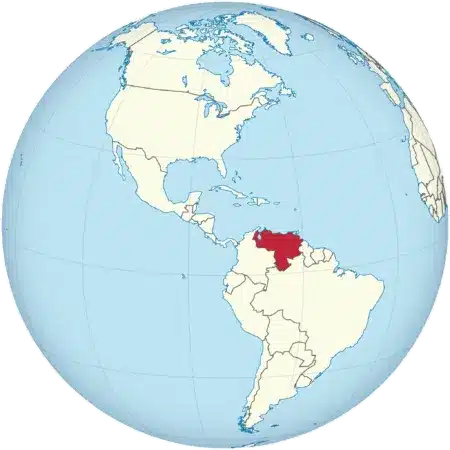
On the initial quiet Saturday morning of 2026, global headlines erupted with astonishing yet somewhat anticipated developments. The Venezuelan president, Nicolás Maduro, along with his spouse, was apprehended during a bold nighttime assault on the capital city. This intricate operation was carried out by combined forces from the United States military and law enforcement agencies, culminating from several weeks of strategic buildup of U.S. assets throughout the surrounding region.
At the moment of this writing, both Maduros are under secure transport to New York, in accordance with a freshly declassified indictment submitted to the United States Department of Justice. This event marks a pivotal moment in international relations, blending elements of criminal prosecution with high-stakes military action.
Although the broader geopolitical consequences of this intervention promise to be multifaceted and divisive, it presents a compelling opportunity-from purely operational and strategic perspectives-to delve deeply into the meticulous processes involved in orchestrating and carrying out such a high-profile mission. This endeavor can be likened to a precisely calibrated surgical procedure on the world stage, demanding unparalleled expertise and coordination.
Opting for a targeted strike to neutralize the leadership directly-often described colloquially as removing the head of the serpent-carries distinct benefits when compared to a full-scale ground invasion. Nevertheless, it necessitates exacting preparation and courageous implementation. Linking the operation to formal legal accusations further complicated matters, requiring seamless collaboration between Justice Department components, particularly the Drug Enforcement Administration (DEA), and the specialized military units tasked with the physical extraction.
A critical imperative throughout was ensuring the safe, live extraction of the Maduros to stand trial, diverging sharply from conventional counterterrorism protocols where lethal force might be authorized under standard rules of engagement. That being noted, emerging reports suggest that former President Trump maintained flexibility, potentially authorizing lethal measures if circumstances on the ground demanded it during the raid.
Successfully apprehending a high-value fugitive, irrespective of their location, hinges on acquiring several vital intelligence pillars. Paramount among these is pinpointing the target’s precise whereabouts at the designated moment of intervention. Domestically, U.S. law enforcement typically maps out networks of known associates and habitual locations through an array of surveillance methods, ranging from digital cell phone tracking to traditional physical stakeouts. These efforts reveal daily routines and behavioral patterns, enabling agents to select optimal arrest sites with minimal risk.
However, when the objective involves a foreign head of government, the challenges multiply dramatically in scope and complexity. Historical precedents abound with leaders employing decoys or body doubles, concealed underground fortresses, and extensive security details to thwart potential threats. Countering such defenses demands a comprehensive intelligence campaign, drawing from diverse strategic resources.
Such resources encompass high-resolution satellite photography, signals intelligence intercepting phone calls and online communications, unmanned aerial vehicle overflights providing live imagery and footage, and likely substantial reliance on human intelligence sources embedded within the target’s closest confidants and advisors.
Beyond merely locating and confirming the target, operational triumph also entails safeguarding the assault team’s integrity. An aerial insertion typically represents the swiftest route to the objective, far preferable to ground traversal on foot or by vehicle across adversarial territory, which heightens vulnerability to detection or ambush. Once again, exhaustive intelligence forms the cornerstone. In doctrinal military terms, this preparatory phase is termed Intelligence Preparation of the Battlespace (IPB), a systematic framework for dissecting the operational environment.

The IPB methodology involves a thorough examination of countless variables influencing mission viability. Certain factors are straightforward, like estimating enemy troop concentrations or their armament inventories. Yet effective planning extends far beyond adversary profiling. Considerations include towering mountain ranges that could impede helicopter navigation, or lunar illumination levels sufficient to silhouette vessels at sea or aircraft against the night sky, potentially compromising stealth.
Following exhaustive IPB, the execution phase demands flawless precision and timing. Here, helicopters ferrying elite special operations personnel navigated across expansive maritime approaches toward a littoral metropolis fortified with surface-to-air weaponry, introducing substantial hazards to the incoming force.
To counter these threats, planners devised a sequenced approach emphasizing the prior neutralization of air defense installations. Overhead electronic warfare aircraft jammed radar systems, communication frequencies, and ancillary detection gear, creating windows for follow-on strike packages to deliver ordnance directly onto anti-aircraft positions. This Suppression of Enemy Air Defenses (SEAD) and Destruction of Enemy Air Defenses (DEAD) phase cleared pathways by eliminating both kinetic threats and surveillance capabilities that might expose inbound helicopters.
With surface-to-air threats eliminated, assault helicopters-transporting the primary raid element, a blocking force to cordon the target structure, and possibly a quick reaction force for reinforcement against stiff opposition-could proceed unimpeded. These aircraft would touch down, secure the perimeter, breach the site, and effect the capture of the Maduros, all within tightly compressed timelines to minimize exposure.
This layered strategy exemplifies the fusion of intelligence dominance, technological superiority, and tactical audacity required for contemporary special operations. The Venezuelan operation underscores how modern militaries integrate legal imperatives with warfighting doctrine, ensuring accountability while achieving strategic objectives. As details emerge, further analysis will reveal additional nuances in this landmark regime transition.
Expanding on the IPB process, it’s worth noting that each step builds upon the previous, creating a cascading foundation of certainty. For instance, pattern-of-life analysis isn’t a one-off snapshot but a longitudinal study, often spanning weeks or months, capturing variations influenced by security alerts, personal habits, or even seasonal changes. Multi-source validation mitigates single-point failures; if satellite data conflicts with signals intelligence, human sources or drone feeds resolve discrepancies.
Terrain assessment goes beyond topography-coastal urban environments like Caracas introduce variables such as building heights for low-level flight evasion, civilian density for collateral risk minimization, and infrastructure like power lines or bridges that could ensnare aircraft. Airspace constraints encompass not just enemy defenses but neutral air traffic, international boundaries, and even commercial shipping lanes over water approaches.
Weather, often the great equalizer, demands real-time monitoring; fog over water could blind pilots, while wind shear might destabilize hovering helicopters during insertion. Enemy air defenses require templating-mapping probable locations based on doctrine, historical deployments, and SIGINT-followed by confirmatory strikes.
Abort criteria are non-negotiable, predefined triggers like excessive civilian presence, mechanical failures, or detected countermeasures that could doom the mission. Contingencies might include diversions to alternate landing zones, exfiltration by sea, or escalation to broader airstrikes.
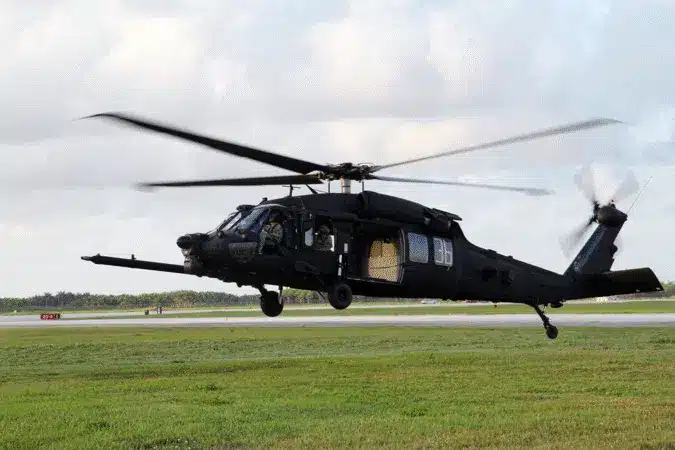
The role of the 160th Special Operations Aviation Regiment, known as the Night Stalkers, cannot be overstated. Their Black Hawks, modified for low-altitude, night operations with advanced avionics, terain-following radar, and noise-suppression features, are purpose-built for such penetrations. Pilots train relentlessly for denied environments, practicing no-notice insertions under simulated enemy fire.
Electronic warfare integration, likely involving EA-18G Growlers or similar platforms, disrupts not just radar but also command-and-control nodes, sowing confusion among responders. Strike aircraft-perhaps F-35s with precision-guided munitions-execute DEAD with minimal footprint, preserving operational surprise.
Ground forces, drawn from elite units like Delta Force or SEAL Team 6, rehearse the compound assault in mockups stateside, synchronizing fast-roping, breaching, and close-quarters battle. Blocking elements establish 360-degree security, neutralizing guards with non-lethal or precision means to facilitate live capture.
Post-capture, exfiltration reverses the insertion: helicopters extract under cover, possibly with CSAR assets on standby. The USS Iwo Jima’s involvement suggests amphibious staging, providing command ships, Marines for security, and helipads for recovery.
Legal overlays add complexity; DEA integration ensures chain-of-custody for evidence, Mirandizing in a combat zone, and medical stabilization for transport. This operation’s success hinges on interagency trust, forged through joint exercises and shared intel.
For preppers and survivalists, Venezuela’s fall offers sobering lessons: regimes crumble under sustained pressure, hyperinflation erodes societies, and targeted interventions reshape maps overnight. Stockpiling, networking, and skill-building remain paramount amid uncertainty.