







Your Next Move, Planned.

Top Emergency Power Stations for Outage Survival
Help Others Prepare
Best Mid-Size Station
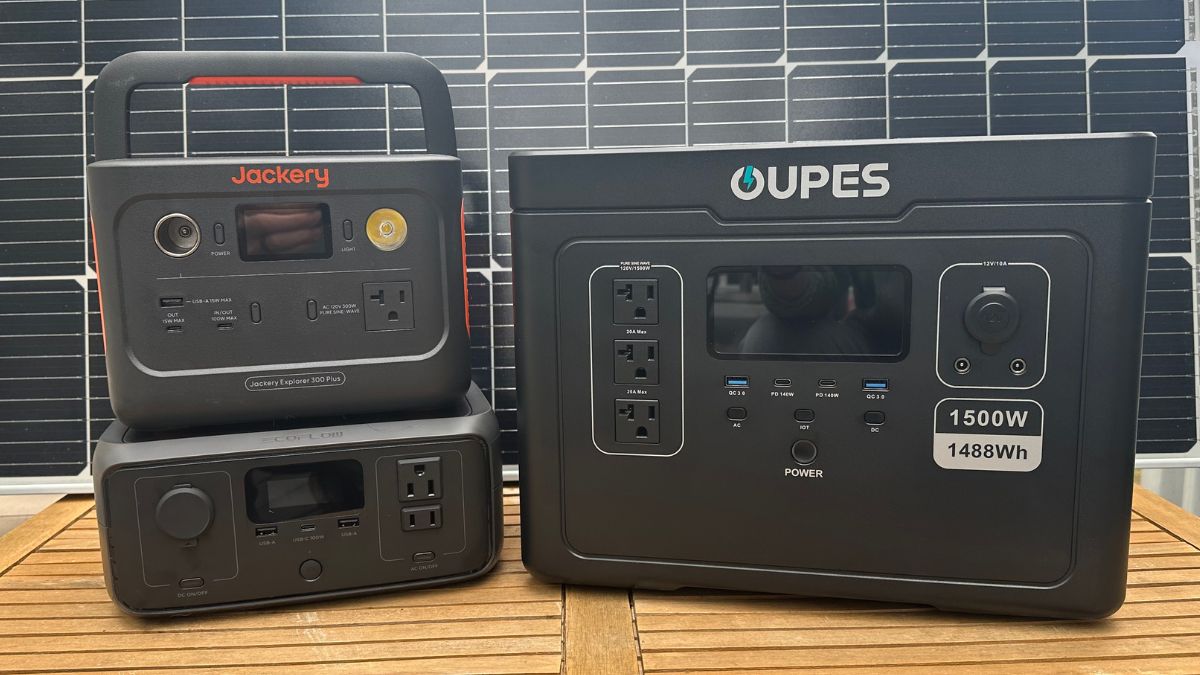
Among the most reliable choices in the mid-size category stands out the Oupes Exodus 1500, a model that combines straightforward functionality with impressive energy storage capabilities at a remarkably accessible price point. When evaluating options where battery capacity plays a pivotal role in decision-making, this particular unit from the Exodus series truly excels, offering substantial power reserves without breaking the bank.

The manufacturer, Oupes, has steadily climbed the ladder of prominence in the portable power station market over recent years. What particularly appeals to users is the ease of use in its operations and the exceptionally low cost per watt-hour of stored energy. While there are a couple of minor limitations, which we will explore in detail shortly, the core specifications and real-world performance during rigorous testing sessions highlight its strengths comprehensively.
Key technical specifications for this device include an output rating of 1500 watts, a total capacity of 1488 watt-hours, a recharge time of approximately 3.93 hours under optimal conditions, utilization of advanced LiFePO4 battery technology capable of enduring 3,500 charge cycles before reaching 80% of original capacity, an uninterruptible power supply switchover time of less than 20 milliseconds, operational noise levels below 20 decibels, physical dimensions measuring 14 inches by 11 inches by 11 inches, a weight of 30.5 pounds, and a comprehensive 36-month warranty coverage.
Access to the stored power is facilitated through a diverse selection of output sockets, ensuring compatibility with a wide range of devices. Activation of the Boost Mode extends support to appliances and electronics demanding up to 1700 watts. Input options encompass both Anderson and standard AC sockets, enabling rapid charging at 800 watts via AC or 480 watts through solar panels.
Included adapters for the Anderson port simplify connections for automotive charging as well as universal MC4 solar panel interfaces. The built-in MPPT controller is specifically tuned for 24-volt solar setups, a detail worth noting for potential users. During testing, two 12-volt Renogy solar panels were connected in series to demonstrate seamless integration with this power station.

The presence of a standardized Anderson port, paired with the supplied MC4 universal solar connector, greatly simplifies the incorporation of third-party solar panels into your setup.
Available output ports consist of three 120-volt AC outlets rated at 120 volts and 20 amps, two USB-C ports delivering up to 140 watts each, two USB-A ports providing 18 watts with 3.0 technology, one 12-volt/10-amp car socket, and two DC 5521 ports also at 12 volts/10 amps.
Input capabilities feature one Anderson port suitable for solar, car, or other compatible sources, alongside one AC adapter port.
Certain aspects drew criticism during evaluation, such as the companion mobile application from Oupes, which proved challenging to pair with the device and lacked intuitive navigation. This becomes more pertinent for expansive, scalable power systems where remote monitoring is frequent. Additionally, the integrated handle design feels awkward, protruding unnecessarily from the rear and preventing the unit from sitting flush against walls or tight spaces. These elements slightly impacted scores in portability and versatility categories.
Nevertheless, Oupes has established itself as the frontrunner among budget-conscious power stations, surpassing competitors through superior capacity offerings and sharper pricing strategies. Consequently, the Oupes Exodus 1500 emerges as the premier recommendation for the majority of mid-capacity emergency scenarios.

This configuration delivers high-capacity performance at a minimal expense, making it an ideal solution for extended outage preparedness.
Portable Power Station
For individuals prioritizing mobility without sacrificing reliability, the Jackery Explorer 300 Plus represents an outstanding compact, lightweight, and durable option encased in a robust shell protecting a high-performance LiFePO4 battery core.

Jackery pioneered widespread adoption of portable power stations, introducing innovative models that captured market attention from the outset. Despite growing competition, they maintain competitive pricing across various product lines. The Explorer 300 Plus, along with its expandable counterpart the Explorer 5000 Plus, quickly garnered recognition for exceptional value across different size spectrums.
Notable specifications encompass a 300-watt output, 288 watt-hours capacity, recharge duration of 1.91 hours, LiFePO4 battery rated for 3,000 cycles to 80% capacity retention, UPS switchover under 20 milliseconds, noise below 45 decibels, dimensions of 9.1 inches by 6.6 inches by 6.1 inches, weight of just 8.1 pounds, and a 36-month warranty.
Remarkably compact-comparable in size to a human head-this Jackery model conceals substantial, resilient energy reserves within. Disassembly during testing revealed a sophisticated ‘box within a box’ architecture, where internal batteries, circuit boards, and components are isolated from the outer casing. This setup renders the exterior as a protective, replaceable layer against drops, impacts, abrasions, or exposure to elements, emphasizing rugged portability in its engineering.
When selecting Jackery products, prioritize those designated with ‘Plus’ or ‘v2’ suffixes, as these incorporate the latest advancements in LiFePO4 battery technology.

Encased in a diminutive yet potent and resilient package, this unit excels in on-the-go applications.
A common critique of Jackery devices involves proprietary connectors for solar panels, often lacking included adapters for broader compatibility. The Explorer 300 Plus employs a 100-watt USB-C port for bidirectional solar charging but omits supplementary adapters.
- One 120-volt AC outlet (120V/20A)
- One 100-watt USB-C port
- One 15-watt USB-C port
- One 15-watt USB-A port
- One 12-volt/10-amp car socket
Inputs comprise one USB-C port supporting input and output functions, plus one AC adapter port.
The mobile app receives widespread dissatisfaction, evidenced by its low 2.6 app store rating, which is unexpected given Jackery’s veteran status in the industry. While functional and superior to some entry-level alternatives with connectivity woes, it falls short of anticipated standards.
Overriding these drawbacks, the Jackery Explorer 300 Plus solidifies its position as the leading portable power station for emergency use, balancing compactness with dependable performance.
Extra Large Power Station
Transitioning to substantial energy demands, the EcoFlow Delta Pro 3 distinguishes itself through premium construction, expansive capacity, and modular expandability, scaling effortlessly to match diverse requirements while boasting superior build quality.

Investing in extra-large capacity power stations constitutes a major commitment, demanding not only vast storage but also exemplary quality and scalability as standard expectations.
EcoFlow’s newest iteration impressively meets these benchmarks, enhancing UPS responsiveness to blazing speeds, minimizing audible operation under light loads, accelerating recharge rates, extending battery longevity, and providing an extended warranty that outpaces rivals. Furthermore, it functions as a versatile platform capable of powering an entire household through strategic expansions.
Specifications highlight a 4,000-watt output, 4,096 watt-hours capacity, 1.46-hour recharge time, LiFePO4 cells with 4,000 cycles to 80%, UPS switchover below 10 milliseconds, 30-decibel noise profile, dimensions of 27.3 inches by 16.1 inches by 13.4 inches, 114-pound weight, and a robust 60-month warranty.
EcoFlow employs the XT60 connector-semi-standard rather than fully proprietary-for solar and automotive inputs, though dedicated adapters (sold separately) are required. Dual XT60 ports offer configurable high (30-150V, 1600W) and low (11-60V, 1000W) voltage options, combinable for up to 2600 watts solar input, facilitating easy adaptation of existing panels.

Although Anderson ports are preferred, the XT60 from EcoFlow maintains reasonable interoperability.
- Three 120-volt AC outlets (120V/20A)
- Two 140-watt USB-C ports
- Two 18-watt USB-A 3.0 ports
- One 12-volt/10-amp car socket
- Two 12-volt/10-amp DC 5521 ports
Inputs include two XT60 ports, one AC port, one EV/smart home port, and one EcoFlow alternator port.
The accompanying app ranks among the most responsive and user-friendly tested, with swift pairing, extensive customization options, and precise energy management controls.
Through its scalable capacity, unwavering quality, and multifaceted versatility, the EcoFlow Delta Pro 3 claims the title of premier extra-large power station on the market today.
Comparison Table
To aid in selection, the following table juxtaposes key attributes across top contenders and additional models evaluated, focusing on capacity, output, pricing, and standout features. Prices reflect conditions at the latest assessment.
- Oupes Exodus 1500: Mid-Size recommendation, capacity 1,488 Wh, output 1,500 W, best for capacity value
- Jackery Explorer 300 Plus: Portable recommendation, capacity 288 Wh, output 300 W, best for rugged portability
- EcoFlow Delta Pro 3: Extra Large recommendation, capacity 4,096 Wh, output 4,000 W, best for expandability to 48kWh
- Jackery Explorer 240 v2: capacity 256 Wh, output 300 W, rugged portability
- EcoFlow River 3: capacity 245 Wh, output 300 W, low charge time
- Bluetti EB3A: capacity 268 Wh, output 600 W, app control
- Goal Zero Yeti 300: capacity 297 Wh, output 350 W, app control
- Bluetti AC70: capacity 768 Wh, output 1,000 W, app control
- DJI Power 1000: capacity 1,024 Wh, output 2,200 W, high AC output
- Anker Solix C1000: capacity 1,056 Wh, output 1,800 W, lowest cost expandable
- Bluetti AC180: capacity 1,152 Wh, output 1,800 W, low charge time
- EcoFlow Delta 3: capacity 1,024 Wh, output 1,800 W, manufacturing quality
- Jackery Explorer 1000 v2: capacity 1,070 Wh, output 1,500 W, high lifetime cycles
- Fossibot F3600 Pro: capacity 2,048 Wh, output 4,800 W, high AC output
- Bluetti Elite 200 v2: capacity 2,073 Wh, output 2,600 W, app control
- Jackery Explorer 2000 v2: capacity 2,042 Wh, output 2,200 W, high lifetime cycles
- Anker Solix F2000: capacity 2,048 Wh, output 2,400 W, app control
- Pecron E3600LFP: capacity 3,072 Wh, output 3,600 W, capacity value
- Anker Solix F3800: capacity 3,840 Wh, output 6,000 W, expandable to 26kWh
- Jackery Explorer 5000 Plus: capacity 5,040 Wh, output 7,200 W, expandable to 60kWh
- EcoFlow Delta Pro Ultra: capacity 6,144 Wh, output 7,200 W, expandable to 90kWh
The Stations We Compared
Our evaluation process meticulously sifted through numerous brands and models, including prominent names like Jackery, EcoFlow, Bluetti, Oupes, Anker, and others, to identify top performers. Detailed review criteria, encompassing value, capacity, quality, versatility, and portability, are elaborated in subsequent sections with comprehensive explanations.
Power stations naturally cluster into capacity-based categories that align with pricing structures and inversely correlate with ease of transport. These groupings are defined as follows:
- Portable: Exceptionally mobile units featuring at minimum one AC outlet, capacities under 300 watt-hours, and weights not exceeding 15 pounds.
- Mid-Size: Handheld or wheeled stations with capacities ranging from 300 to 2,000 watt-hours.
- Extra Large: High-capacity mobile solutions exceeding 2,000 watt-hours, often with expansion potential.
- Installed: Stationary battery systems designed for ongoing or emergency building power provision.
For installed comparisons, the Tesla Powerwall 3 served as a high-end benchmark against expandable portables. We continually scout emerging equipment; user suggestions for trusted outage performers are welcomed for future annual reassessments to challenge current leaders.
Why Trust TruePrepper
As Sean Gold, founder of TruePrepper since 2016, I have extensively tested energy equipment with an industrial engineering background that informs disassembly analyses for manufacturing insights. Advancements in capacity and affordability have revolutionized emergency power utility. Testing prioritizes efficiency, internal quality scrutiny, while proprietary connectors and subpar designs draw scrutiny.
What to Look For
Optimal emergency power stations exhibit distinct attributes. Pre-testing, we weighted criteria to compute overall scores: value, capacity (40% weight), quality (35%), versatility (15%), and portability (10%). These facilitate comparisons; maximum scores of 100 are structurally unattainable, with superior relative performance at comparable prices signaling excellence. Capacity dominates weighting yet balances against collective factors.
Value: Cost vs. Benefit
Unlike inexpensive emergency gear, power stations command premium prices scaling with capacity. Dollar-per-watt-hour metrics overlook holistic benefits captured in overall scores versus contemporaneous costs. Personal priorities-capacity over portability for some, premium quality for others-guide choices; provided data empowers informed decisions.
Capacity
Capacity reigns supreme in power storage efficacy, with brands aggressively inflating specs for marketing edge. Real-world usable capacity hovers at 85% per manufacturers; for instance, a 268 Wh Bluetti EB3A yields about 228 hours on a 1-watt bulb (268 x 0.85). LiFePO4 progress notwithstanding, research reveals manufacturing variances even within identical production runs, rendering single-unit tests statistically limited. Thus, we report ‘test unit measured capacity’ judiciously, complementing with quality metrics for fuller assessment.
Quality
Quality complements capacity as paramount. Evaluations span charge dynamics to internal inspections.
Manufacturing Quality
Beyond functional tests, visual and disassembly probes reveal truths. Modern exteriors belie internals; engineering scrutiny favors compact boards signaling efficiency, adept thermal management via airflow and paste, robust connectors over soldering for durability/repairability, and optimized cell nesting.

Over-engineered internals in Jackery exemplify resilience against abuse. Note: Disassembly risks warranty voidance, fire, or shock hazards.
Charge Time
Charging accelerates initially, tapering near full-often the final 20% matching initial 50% duration-prompting 80% charge claims. Smart plugs quantified times and AC efficiencies precisely.

Smart plug integrations streamlined charge metric acquisitions via app monitoring.
Versatility
Versatility manifests in port diversity, integrated features like lights, expansion, and app efficacy.
Input and Output Ports
Port abundance enhances utility; proprietary designs coerce brand ecosystems.
Expansion
Modularity scales affordably versus upfront whole-home costs. Expansion graphs (sans connectors/taxes) benchmark against Tesla Powerwall 3. Average homes consume ~30 kWh daily, reducible in outages via conservation, underscoring scalable solutions’ relevance for sustained self-reliance during prolonged blackouts or disasters.