







Your Next Move, Planned.

Top 2 Foods for Ultimate Cheap Long-Term Food Stockpile
Help Others Prepare
It is difficult to pinpoint the exact moment, whether it was during the early days of the COVID pandemic or a few years prior, but eventually, Thomas and I reached a stage in our new residence in Portugal where we decided to significantly expand our long-term emergency food reserves rather than focusing solely on short-term supplies.
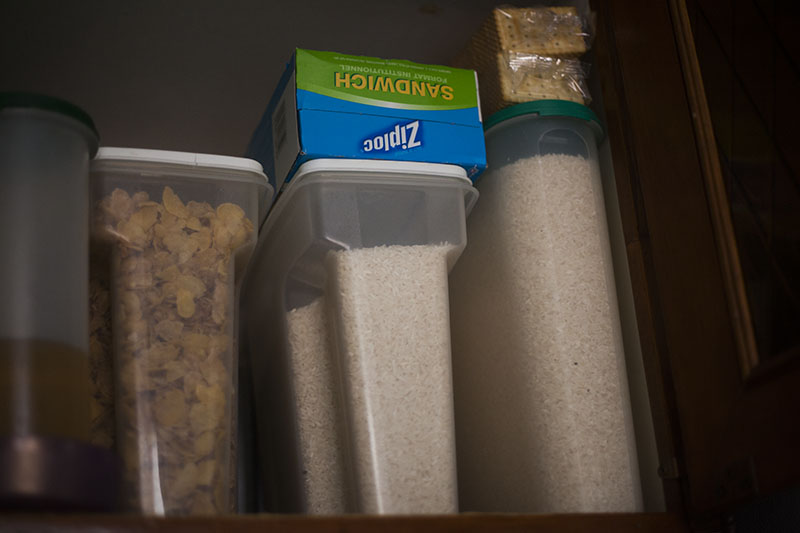
Our pantry was already well-stocked with an abundance of foods boasting extended shelf lives, items that we regularly incorporated into our daily meals to safeguard against rising prices of favorites such as canned sardines and tuna. We had accumulated substantial quantities of nuts, peanut butter, and various backup provisions to ensure we were covered.
Nevertheless, Thomas began feeling uneasy about the extent of our overall food reserves and suggested we ramp up our preparations by purchasing large amounts from the neighborhood supermarket, insisting on adding numerous items to our shopping cart.
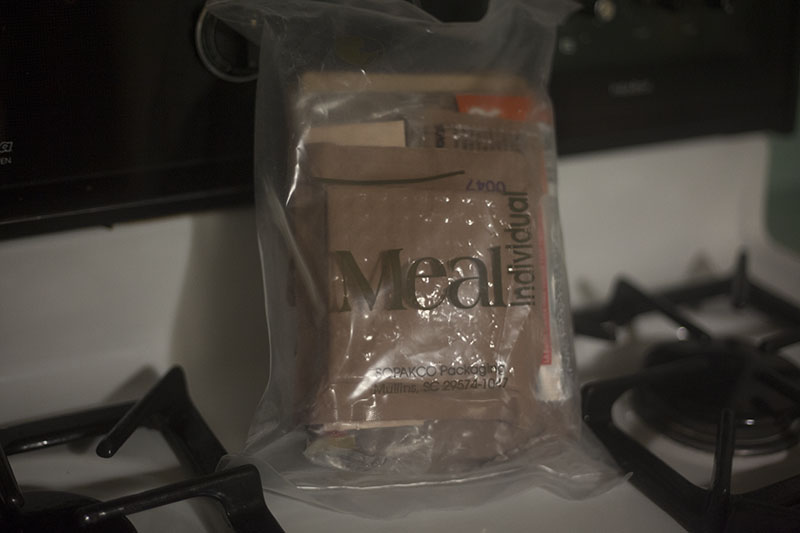
These were primarily canned soups and other convenient meal options-products I was certain we would never willingly consume in an emergency scenario.
The idea started to frustrate me deeply. I firmly adhere to the principle of only stockpiling foods that we would actually eat, particularly when superior alternatives exist in abundance. In my view, the only real exceptions to this rule include:
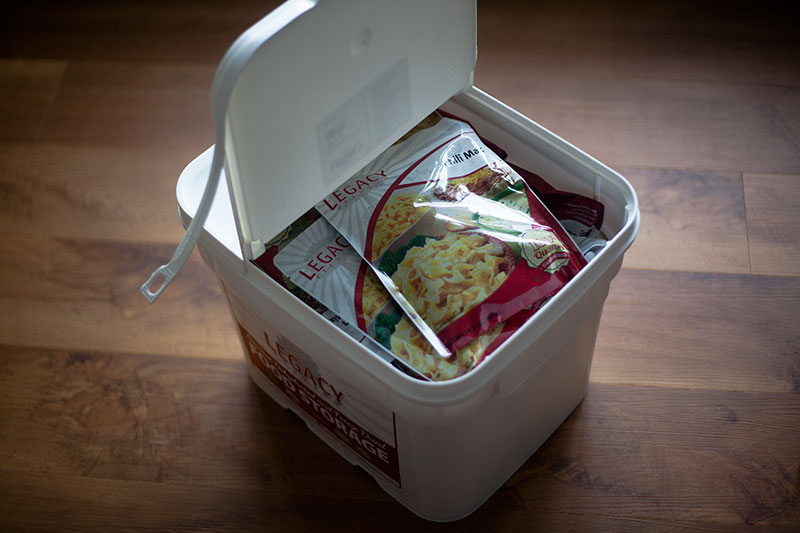
- Dehydrated foods, such as those we have evaluated from brands like Legacy Food Storage or Valley Food Storage. These are excellent choices, and stocking several years’ worth poses no issue whatsoever. We truly appreciate them for their reliability and taste.
- Numerous entries from our comprehensive list of the best survival foods capable of lasting indefinitely, far outliving their owners. This resource has proven invaluable over the years, and I am pleased to have compiled it for repeated reference.
On the other hand, items like soups, pasta sauces, and similar products-which we had previously hoarded-represented a considerable misallocation of resources in my opinion.
I kept reflecting on the substantial quantities of uneaten food we had to donate after relocating from our home in Canada, and later from our place in the UK. The majority consisted of precisely these types of items, along with crackers, assorted jars, and miscellaneous boxes of products that ultimately proved unpalatable over extended periods.
I had grown weary of such wasteful expenditures that seemed costly despite their modest actual price tags. In terms of value per dollar spent, they offered disappointingly low returns within a strategic food stockpile.
Equally concerning was the inefficient use of storage space. A single can of soup, predominantly filled with water, occupied valuable room for minimal nutritional benefit. This inefficiency was intolerable to me.
The Optimal 2-Ingredient Strategy for the Most Cost-Effective and Space-Efficient Long-Term Food Reserves
I persuaded Thomas that maintaining our short-term stockpile with foods we were certain to consume was the right approach, as we had been doing successfully. However, if he insisted on bolstering our long-term reserves, we should prioritize the most economical, compact, nutrient-packed, and enduring options available.
This selection would sustain us adequately, even if it lacked excitement in variety.
He eagerly agreed but was perplexed about what could fulfill all these criteria simultaneously. That changed the instant I revealed the names of just two simple foods: rice and dried lentils.
That suggestion sealed the deal immediately.
For those in the United States, accessing bulk quantities is straightforward, making it ideal to procure large volumes of rice and dried lentils in a single convenient order. This streamlined process simplifies building a substantial reserve.
I would likely adopt a similar bulk-buying strategy in Canada. However, online shopping there tends to be considerably pricier compared to the US or even parts of Europe, primarily due to higher shipping fees and fewer competitive online retailers.
In Europe, where we currently reside, bulk purchasing is less prevalent despite affordable online delivery options. Consequently, we gradually added smaller packs-typically in sets of six-to our cart over the ensuing weeks and months, rapidly assembling an enormous long-term food stockpile at a fraction of the expected cost.

Why Rice and Lentils Deliver Unmatched Value as the Premier Long-Term Survival Food Combination
What makes this duo of rice and lentils the ultimate powerhouse for a long-term food stockpile?
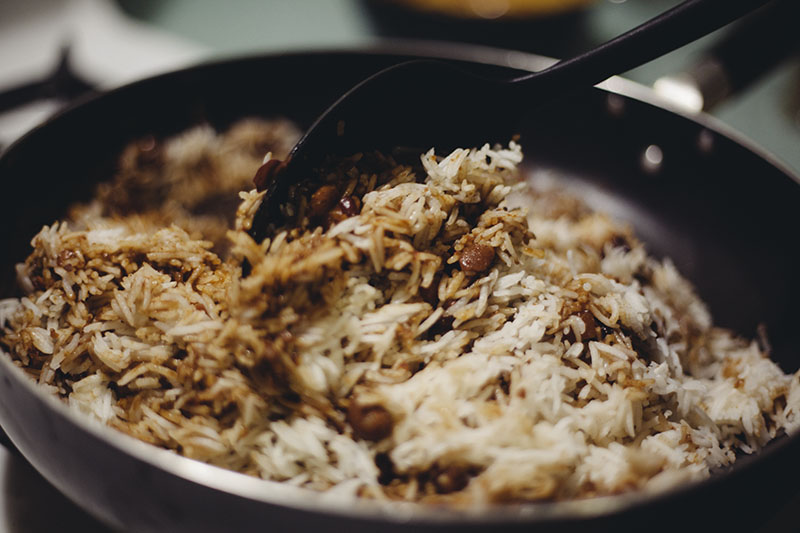
Rice stands out as an exceptionally versatile carbohydrate perfectly suited for extended survival scenarios. Personally, I consider it unrivaled in its category.
Preparation could not be simpler: just combine with water, apply heat, and boil to produce a complete meal. This method demands only basic fire and water resources, rendering it far less labor-intensive than baking bread or dealing with the shorter shelf life of pasta.
Moreover, its storage footprint is remarkably minimal, requiring only a fraction of the space compared to other staples.
Some might dismiss concerns over space efficiency, but after residing across two continents in homes of varying sizes, I have developed a profound appreciation for compact storage solutions.
Although space is not a pressing constraint in our current setup, its importance remains paramount for future-proofing.
Consider this practical example: faced with evacuating quickly, would I prefer transporting a large container of rice or an equivalent volume of canned soup? Without hesitation, the rice wins-it provides exponentially more sustenance over time.
Admittedly, I benefit from reliable water access in our location, where drought risks are negligible-a key factor in selecting Portugal over more arid regions like Spain. We intend to leverage this advantage fully.
Whether sheltering in place or relocating, maximizing food volume through space optimization is crucial. This approach appeals to my preference for efficient resource management.
Since rice features prominently in our regular diet, incorporating it into our reserves was effortless. We have already consumed a significant portion of our initial stock, prompting plans for replenishment. I am also considering preparing dedicated emergency batches that we set aside untouched, primed for rapid deployment in a crisis.
Now, regarding lentils-Thomas favors them, though I remain less enthusiastic. Nevertheless, I am adaptable and can tolerate repetitive meals longer than most, ensuring viability in prolonged scenarios.
Lentils deserve serious acclaim for their attributes. As a non-perishable, plant-based protein source, they store effortlessly for years, needing only a cool, dry, shaded environment.
Their nutritional profile is outstanding, packed with essential vitamins, minerals, and macronutrients.
In truth, they approach complete nutritional self-sufficiency.

What does ‘nearly nutritionally complete’ signify? It refers to encompassing virtually all dietary requirements for human sustenance-not mere survival, but comprehensive nutritional support.
While rehydrated and cooked dried lentils fall slightly short of 100% completeness, few foods come as close. Vegetables or dairy might supplement further, but animal proteins like meat achieve full completeness-yet they spoil quickly, disqualifying them for long-term storage.
Delving deeper into lentils’ profile, research highlights their deficiency in specific essential amino acids: methionine and cysteine, particularly in green and split red varieties.
To achieve protein completeness, incorporate diverse legumes, nuts, seeds, and grains daily. A classic pairing is lentils with rice, which supplies the missing elements-no need to consume them simultaneously for benefits.
Remarkably, rice precisely provides the methionine and cysteine lentils lack in abundance. This synergy is perfection.
Alternatively, for standalone lentils, nuts, seeds, or grains-common long-term stockpile items-can fill the gap effectively.
Wondering if lentils alone suffice for indefinite survival during evacuation? Surprisingly, yes, with a simple enhancement.
Sprouting transforms them: soak for 8-14 hours based on size, unlocking all essential amino acids, including methionine and cystine. This process elevates lentils to full nutritional completeness independently.
Of course, pairing with grains like rice or wheat yields identical results, while lentils also deliver fiber, B1 vitamin, folic acid, and gluten-free appeal.
Thus, rice and lentils alone form a robust foundation. Even lentils solo, especially sprouted, ensure viability-perhaps monotonous daily, but thoroughly sustaining.
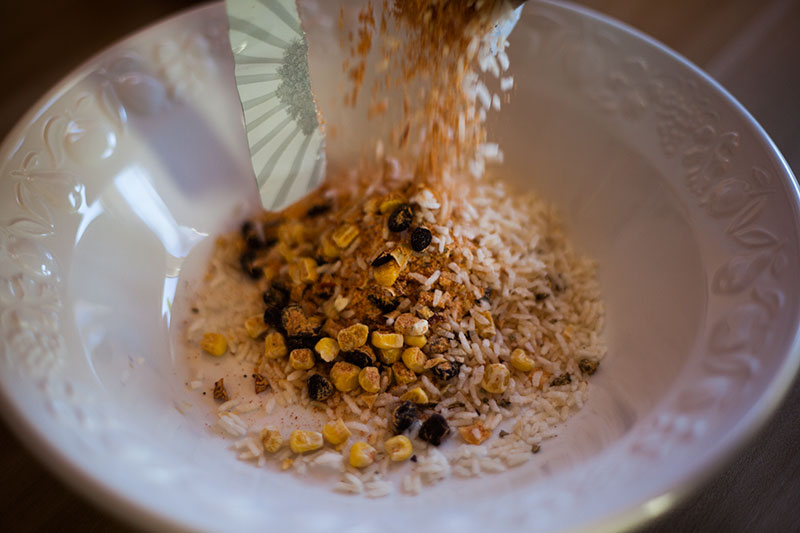
For enhanced variety and nutrition, expand with additional dehydrated legumes, bean types, rice variants, lentil assortments, nuts, seeds, and more from proven long-term survival food lists. Absolutely recommended.
Yet, for core essentials-pure survival assurance without excessive spending-prioritize amplifying rice and dried lentils. A decade or two-year supply assembles swiftly and affordably.
Insights on Optimal Foods for Building Long-Term Emergency Reserves
Which two foods do you rank highest for long-term food stockpiles? How about your top five selections?
Have you previously contemplated relying on just a few key ingredients for extended preparedness? If yes, what comprised your minimal list?
Were you aware of lentils’ near-complete nutritional status or their potential for full completion via sprouting? Do they factor into your current stockpile strategy?
We welcome all perspectives on this essential topic.