



Your Next Move, Planned.

Prepper’s Essential Glossary: Key Terms and Acronyms
Help Others Prepare
Have you ever found yourself diving into a prepping article only to feel completely lost amid the specialized terminology? Perhaps you’ve puzzled over what those common prepper acronyms truly represent? If you’re seeking a comprehensive prepper’s dictionary to decode this unique language, you’re in the right place.
For those just entering the realm of preparedness and survival, the abundance of jargon can indeed be overwhelming and disorienting. Fortunately, this detailed glossary has been compiled specifically for preppers, offering clear explanations and insights into the essential terms you’ll encounter.
A
ABC: Airway, Breathing, Circulation. This sequence outlines the prioritized steps for evaluating and addressing the needs of someone who is ill or injured. It ensures that life-sustaining functions are checked and stabilized in the correct order during emergencies.
AGW: Anthropogenic Global Warming. This term describes the phenomenon of global warming primarily driven by human activities, such as industrial emissions and deforestation, which contribute to rising temperatures worldwide.
Alpha Strategy: A proactive approach to stockpiling supplies where you accumulate more long-term provisions than your household immediately requires. The excess is earmarked for trading, bartering, or charitable distribution during times of crisis or scarcity.
B
Bugging In: The decision to remain securely in your current home or location throughout a crisis or societal disruption. This strategy prioritizes fortifying your position rather than relocating, often when movement poses greater risks.
Bugging Out: The act of promptly evacuating your home or current site in response to a crisis or collapse. It involves leaving for a safer destination, emphasizing rapid departure to avoid escalating dangers.
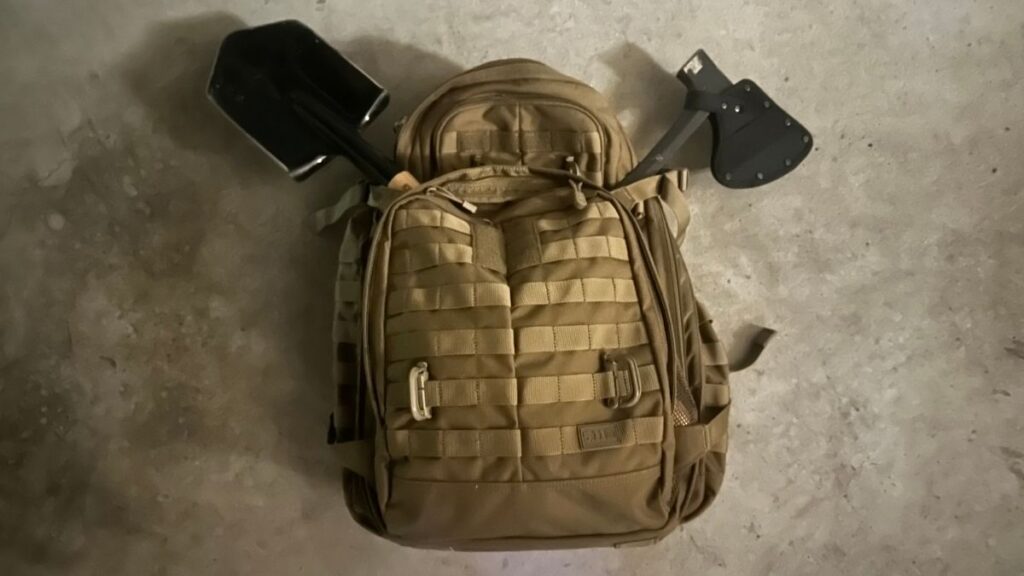
BOB: Bug Out Bag. This is a portable backpack or kit assembled with all vital supplies necessary for surviving outside your home for at least 72 hours. It typically includes non-perishable food, critical tools, water filtration systems, and personalized essentials like medications or replacement eyewear tailored to your specific needs and situation.
BOL: Bug Out Location or Bug Out Lodge. Refers to a predetermined safe haven or retreat site where you intend to relocate if your primary residence becomes untenable or unsafe due to threats or damage.
BOR: Bug Out Route. Pre-planned pathways, mapped out with a minimum of two alternate options, clearly delineated for use during evacuation. It’s wise to rehearse these routes in advance, scouting for potential obstacles, and identifying key stops for rest, water refills, or food along the way.
BOV: Bug Out Vehicle. The selected mode of transportation designed to carry you and your group from your starting point to your bug out location efficiently and reliably. Considerations might include fuel efficiency, off-road capability, or even non-motorized options like bicycles for certain scenarios.
C
Cache: Strategically hidden or stored supplies positioned at key points along your travel path back home or toward your bug out location. Caches can also denote buried stockpiles secured for protection against theft or discovery during unstable times.
CC: Concealed Carry. The practice of keeping a firearm on your body in a manner that remains hidden from public view, allowing for discreet personal protection.
CCP: Concealed Carry Permit. An official government-issued license authorizing the legal transportation of a concealed firearm in permitted public areas, with variations in restrictions depending on local jurisdiction.
CCW: Concealed Carry Weapon. Synonymous with concealed carry firearms or similar hidden defensive tools.
CME: Coronal Mass Ejection. A massive burst of solar plasma directed toward Earth, capable of disrupting or destroying electrical transformers, leading to extensive, prolonged power outages across vast regions. Commonly referred to as solar storms.
D
DECON: Decontamination. Procedures aimed at neutralizing or containing hazards from chemical, biological, nuclear, or radiological incidents to prevent further spread or exposure.
DECON A: Decontamination Area. A designated, isolated zone equipped and sealed for performing decontamination activities safely and effectively.
E
EDC: Every Day Carry. A compact, everyday assortment of essential items you keep on your person at all times, ready for unexpected situations.
EMP: Electromagnetic Pulse. A burst of electromagnetic radiation, either from natural events like solar flares or artificial sources, potent enough to disable power grids and electronic systems over expansive areas.
F
FAK: First Aid Kit. A comprehensive medical kit far beyond basic bandages, equipped with advanced supplies for managing severe injuries such as gunshot wounds, deep lacerations, or major trauma.
FIFO: First In, First Out. The fundamental method for rotating food storage to ensure older items are consumed before they expire, maintaining freshness and usability.
FRH: Flameless Ration Heater. A specialized, water-activated heating packet bundled with Meals Ready to Eat (MREs) to warm food without fire or external heat sources.
FUBAR: F***ed Up Beyond All Recognition. A colloquial expression for a situation that has deteriorated into complete chaos, with no feasible path to recovery.
G
Genny/Geni: Generator. A backup power unit employed to provide electricity during outages or off-grid living scenarios.
GMO: Genetically Modified Organism. Food products altered at the genetic level, which many in the prepping community avoid due to concerns over long-term health and environmental impacts.
GHB: Get Home Bag. A portable kit containing necessities to safely travel from distant locations like workplaces or schools back to your home during sudden emergencies.
GOOD: Get Out of Dodge. An urgent call to evacuate immediately from a hazardous area, typically triggered by events rendering your location untenable.
Grey Man: A tactical blending technique where you make yourself inconspicuous in crowds, avoiding attention or memorable descriptions by adopting neutral attire and behaviors.
H
Ham: Amateur radio operator. Individuals licensed to use radio frequencies for communication, especially valuable when standard networks fail.
HEMP: High-altitude Electromagnetic Pulse. A specific type of EMP generated at high altitudes, amplifying its disruptive effects over large landmasses.
Hunker Down: The practice of remaining sheltered and secure within your home throughout an emergency period, synonymous with bugging in.
I
IFAK: Individual First Aid Kit. A compact, personal medical pouch stocked with supplies sufficient for self-treatment or aiding one other person in critical situations.
INCH: I’m Never Coming Home. A prearranged signal to inform your group or family that return is impossible, urging them to proceed without delay or waiting.
L
LED: Light-Emitting Diode. Efficient, durable small bulbs ideal for integration into low-power circuits, favored for their longevity in emergency lighting applications.
LEO: Law Enforcement Officer. Personnel responsible for upholding laws and maintaining public order.
M
MAG: Mutual Aid Group. A regular gathering of like-minded individuals focused on sharing knowledge, resources, and mutual support in preparedness matters.
Martial Law: A state where civilian governance is temporarily overridden by military authority, suspending normal constitutional rights during severe crises.
MRE: Meals Ready to Eat. Shelf-stable, pre-packaged meals designed for consumption without cooking, popular in military use and often paired with flameless heaters.
MSM: Mainstream Media. Traditional outlets like major networks and newspapers, often critiqued for bias in reporting during uncertain times.
N
N95 Mask: Respiratory mask filtering out at least 95% of airborne particulates, essential for protection against dust, smoke, or certain pathogens.
N100 Mask: Advanced mask capturing 99.97% of airborne particles, recommended for finer contaminants or more hazardous viral threats.
NAD: Not A Drill. An authoritative declaration from officials signaling a genuine, high-stakes event requiring immediate action.
NBC: Nuclear, Biological, Chemical. Encompasses threats or protective equipment related to nuclear, biological, or chemical agents and attacks.
NWH: Nuclear Warhead. The explosive nuclear payload affixed to missiles or delivery systems.
O
OC: Open Carry. Visibly transporting a firearm on one’s person, in compliance with applicable laws.
OPSEC: Operational Security. Practices to safeguard sensitive information, preventing adversaries from piecing together details that could compromise your plans or resources.
P
PAW: Post-Apocalyptic World. The altered societal and technological landscape persisting after a catastrophic event reshapes civilization.
PCW: Post-Collapse World. Similar to PAW, describing the world following a total societal breakdown.
PDW: Personal Defense Weapon. Compact arms like pistols or knives kept readily accessible for self-protection.
PSK: Personal Survival Kit. A minimalist kit, often housed in a small container, packed with versatile tools like compasses, mirrors, fishing gear, and fire starters for dire straits.
Q
QT: Quiet or Quietly. Performing actions discreetly and silently to evade detection, or handling matters covertly.
R
RECON: Reconnaissance. Covert scouting missions to gather intelligence on locations or individuals, often conducted solo to assess safety ahead of the group.
Rule Of Three: A survival guideline highlighting human limits: roughly 3 minutes without air, 3 days without water, and 3 weeks without food before fatal consequences.
S
SERE: Survival, Evasion, Resistance, Escape. Core training for enduring harsh environments, avoiding capture, and resisting interrogation.
Sheeple: Derogatory term for individuals who follow directives unquestioningly, lacking independent critical analysis.
Shelter-In-Place: Remaining in your current spot during hazards, as movement could expose you to greater dangers than staying protected indoors.
SHTF: Sh*t Hits The Fan. Prepper shorthand for a major, transformative disaster upending normal life.
SITREP: Situation Report. Updates from group members on watch or scouts, detailing observations and conditions.
SWOT: Strengths, Weaknesses, Opportunities, Threats. A strategic analysis tool for evaluating preparedness plans or sites comprehensively.
T
TEOTWAWKI: The End Of The World As We Know It. Describes apocalyptic events fundamentally altering society and daily existence.
TPTB: The Powers That Be. Refers pejoratively to influential elites, governments, and decision-makers shaping global events.
V
VEI: Volcanic Explosivity Index. A measurement scale ranking the intensity and explosiveness of volcanic eruptions for comparative analysis.
W
WMD: Weapons of Mass Destruction. Devastating arms, typically chemical, biological, or nuclear, engineered for massive casualties and infrastructure ruin.
WROL: Without Rule Of Law. The anarchic phase ensuing after societal structures collapse, leading to widespread disorder.
Y
YOYO: You’re On Your Own. A scenario devoid of external aid from authorities, emergency services, or government, demanding complete self-reliance.
Z
Zeer Pot: A simple, electricity-free cooling system using nested terracotta pots filled with damp sand in the space between them. Evaporative cooling from the wet sand lowers the internal temperature significantly below ambient air.
ZOMBIE: In prepper contexts, not undead fiction, but dazed individuals or groups aimlessly milling about post-disaster, who later turn aggressive out of hunger and desperation.