







Your Next Move, Planned.

Perilla Mint Identification: Foraging Guide
Help Others Prepare
If you enjoy incorporating wild greens into your diet, consider adding perilla to your collection of foraged edibles. This versatile plant, belonging to the mint family, has long been cultivated in Asia for both culinary applications and traditional medicinal purposes. Upon its introduction to the United States, it rapidly established itself as an aggressive invasive species, earning a notorious reputation among land managers and farmers.
Although its invasiveness is a legitimate concern-particularly because perilla can be toxic to grazing livestock-the plant poses no such danger to humans and offers exceptional flavor when harvested and prepared correctly. Its widespread abundance makes it an invaluable resource for homesteaders, providing a reliable source of fresh greens for immediate consumption or preservation through drying, freezing, or pickling for use throughout the colder months. Beyond its nutritional value, perilla boasts a range of practical health benefits that have been recognized in various herbal traditions.
Eager to explore this underappreciated wild food? Continue reading to master the art of identifying perilla in the field and distinguishing it from potential mimics that could lead to foraging mishaps.
Taxonomy and Key Identifying Features
Perilla goes by a multitude of common names that vary by region, including shiso, beefsteak plant, wild basil, Chinese basil, wild coleus, purple mint, and several others. In certain areas, locals dub it “rattlesnake weed” due to the distinctive rattling noise produced by its mature seed pods when disturbed by wind or touch-a sound that might startle even experienced foragers venturing off the beaten path.

Foragers can confidently recognize perilla by its characteristic serrated foliage, pronounced herbaceous aroma, and remarkable adaptability to diverse environmental conditions. Taxonomically, perilla encompasses several species, with naming conventions differing across geographies, but all varieties share the traits of being woody-based, herbaceous annual plants that complete their life cycle within a single growing season.
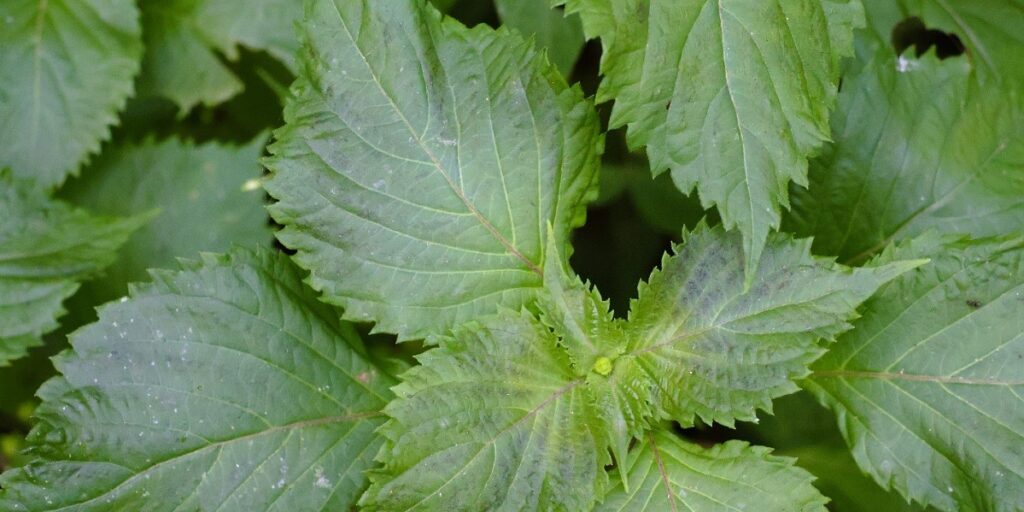
In the United States, foragers commonly encounter two primary variants: the green form, typically classified as Perilla frutescens, and the purple or red variant, often denoted as Perilla frutescens var. crispa. These two types are morphologically similar, differing mainly in their coloration, which can range from vibrant green to deep burgundy or purple hues.
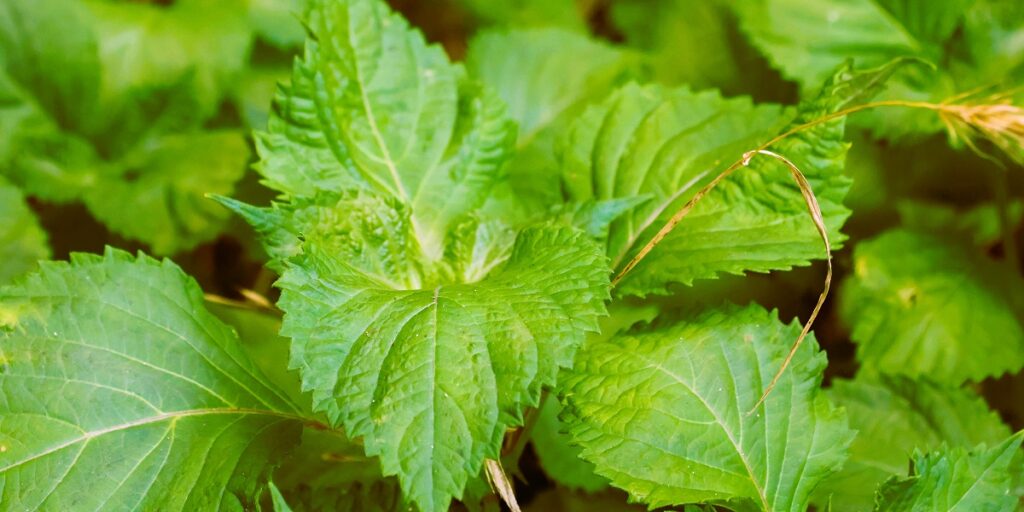
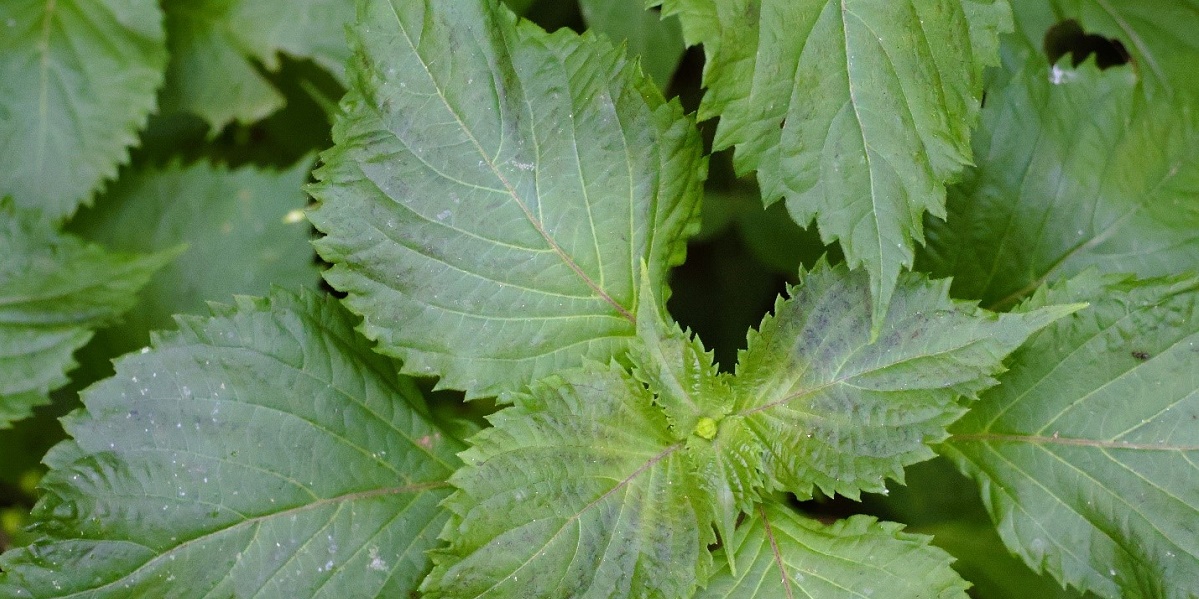
- Leaves: The leaves are oval-shaped with noticeably serrated margins and can extend up to four inches in length. They are attached to the stem via petioles and feature a central groove, arranging themselves in opposite pairs-a hallmark of many Lamiaceae family members. Foliage coloration varies widely, appearing in shades of green, red, purple, or multicolored patterns. Often, the upper leaf surface displays green while the underside reveals purple tones. The lower surfaces may bear fine, short hairs, whereas the topsides are generally smooth.
- Stems: Stems typically achieve heights of two to three feet, though they can stretch to five or six feet in ideal settings. They may be glabrous or adorned with fine pubescence. Stem color matches the leaf tones-green or purple-and the square, hollow cross-section when sliced is a classic mint family trait.
- Flowers: Toward the end of the growing season, perilla produces elongated flower spikes, known as racemes, emerging from the plant’s apex or along the main stem. These racemes measure three to six inches in length, with tiny flowers-mere millimeters across-blooming sequentially along them in white or purple shades.

Perilla leaves and stems are subtly covered in minute hairs that do not detract from the plant’s palatability or texture, preserving its appeal as a culinary ingredient. To confirm identification in the field, especially with unfamiliar specimens, gently crush a leaf between your fingers and breathe in the released aroma. Perilla emits a captivating, minty-herbaceous fragrance laced with subtle notes of spice, earth, and sweet anise, setting it apart from less desirable plants.

Seasonal Growth Patterns and Habitat Preferences
When It Emerges and Matures
As a warmth-loving herb, perilla germinates in early to mid-summer, reaching full maturity by late summer when it begins to flower profusely. The exact timeline shifts based on local climate variations, but its active growth phase generally spans from May through October in temperate regions. This predictable cycle allows foragers to plan harvests accordingly, targeting young leaves early in the season for tenderness and mature plants later for seed collection.

Flowers on a single raceme often open progressively rather than simultaneously, creating a staggered display that extends the plant’s visual and foraging appeal. Following seed set, the stalks dry out and persist as upright remnants, sometimes enduring through winter. Noting these locations is wise, as they indicate prime spots for next season’s growth, given the plant’s proclivity for reseeding in the same areas.
Preferred Habitats and Adaptability
Perilla thrives in partially shaded environments with consistent moisture, frequently colonizing creek beds ranging from dry to soggy, lowland pastures, shaded forest floors, trail edges, roadside ditches, and open fields. It commonly insinuates itself along fence rows, near outbuildings like barns, and in any soil disturbed by human or animal activity. Its extraordinary adaptability means it proliferates wherever seeds alight, undeterred by most barriers.
A single mature plant can generate up to 1,500 seeds, which maintain viability for years-demonstrating over 60% germination even after four years of room-temperature storage. This prolific reproduction fuels its invasive spread. Remarkably resilient, perilla endures drought conditions where other vegetation falters, producing shorter but still harvestable plants. Even in extreme heat exceeding 100°F in late summer, it persists, offering a steadfast foraging option.

Potential Lookalikes and Differentiation Tips
Perilla shares superficial resemblances with fellow mint family members such as spearmint or purple dead nettle, but its bushier habit and distinctive purple leaf tinges usually facilitate straightforward identification. True wild doppelgangers are scarce, though novice foragers might confuse it with hophornbeam copperleaf.
Hophornbeam Copperleaf
This North American native, scientifically named Acalypha ostryifolia and belonging to the spurge family rather than mints, mimics perilla’s serrated leaves and raceme-like inflorescences. As a late-season bloomer favoring similar moist, disturbed habitats, it poses a risk of misidentification.

Hophornbeam copperleaf frequently plagues gardens, establishing persistent footholds year after year. Distinguish it from perilla via sensory cues: it lacks the minty aroma, attains smaller stature, and omits the signature purple coloration. Leaf shape provides another clue-hophornbeam leaves droop and curl more pronouncedly, evoking cultivated basil varieties. Importantly, avoid ingestion, as hophornbeam copperleaf is mildly toxic to humans.
With these identification skills honed, venture forth to harvest perilla confidently. Its myriad culinary uses-from fresh salads and wraps to infused oils and fermented condiments-promise endless creativity, while foraging contributes to managing this invasive species, benefiting local ecosystems in the process.