






Your Next Move, Planned.

Martial Law Survival Guide: Essential Tactics Revealed
Help Others Prepare
When Is Martial Law Declared?
Martial law represents an extraordinary measure invoked by governments to deploy military forces in maintaining public order amid severe societal disruptions that overwhelm civilian authorities. This extreme step is typically reserved for dire scenarios where the standard governance structure teeters on the brink of total breakdown, necessitating immediate intervention to prevent complete anarchy.
Given that individuals have no influence over the underlying causes prompting such declarations, it becomes imperative to equip oneself with robust survival tactics. These approaches not only bolster physical resilience but also fortify mental endurance, enabling people to navigate the rigid controls and restrictions that accompany military oversight.
Prior to delving into these practical survival methods, it is essential to examine the profound impacts martial law exerts on everyday civilian existence, from curtailed freedoms to disrupted routines.
Martial law comes into effect under circumstances involving catastrophic events that destabilize society on a massive scale. These triggers encompass widespread terrorist incidents, including biological attacks or nuclear threats; uncontrollable civil disturbances such as riots and mass demonstrations; declarations of war between nations; severe economic collapses reminiscent of historical crises like the Great Depression; or internal military coups that upend established power structures.
The gravity of these breakdowns grants military leaders sweeping powers to enforce discipline across the populace, compelling ordinary people to adapt swiftly to enforced legal transformations that reshape daily life.
What Happens When Martial Law Is Declared?
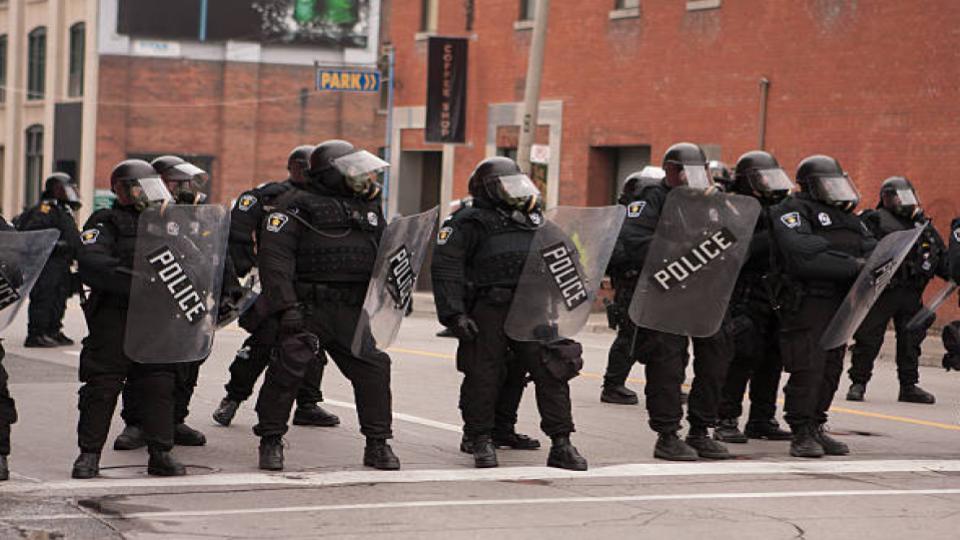
Upon activation, martial law shifts authority to a military judicial framework characterized by stringent, unilateral protocols. This transition instantly curtails fundamental civil liberties, dictating restrictions on movement, speech, associations, and compliance with security checks or detentions.
The scope of impositions varies with the crisis’s intensity, empowering commanders to enact whatever measures they deem necessary for stability. Beyond interrupting essential supply chains for food and necessities, this environment fosters the rise of insurgent factions, intensifying disorder as authorities respond with escalated force to suppress opposition.
Consequently, innocent civilians find themselves ensnared in the escalating violence and instability, highlighting the urgency of preparing effective responses to the question of how to endure such oppressive conditions.
What To Do If Martial Law Is Declared? Survival Strategies
Understand the Applicable Rules
Familiarizing oneself with the prevailing regulations and decrees under martial law equips individuals to anticipate and handle unforeseen developments effectively. This knowledge delineates clear boundaries for permissible actions, fostering a proactive stance.
Moreover, awareness of these guidelines cultivates a resilient psychological framework, allowing one to confront emotional strains preemptively and sustain a sense of agency amid adversity until order is restored.
Thus, prioritizing comprehensive rule comprehension minimizes the risk of inadvertent violations that could attract scrutiny. Vigilantly monitor updates to these directives, as they often evolve rapidly in turbulent times, ensuring ongoing compliance and safeguarding both personal safety and family well-being throughout the martial law duration.
Stock Essential Supplies
Amassing a robust stockpile of vital food and non-food provisions stands as the cornerstone of readiness for unpredictable disruptions. These reserves serve as a critical lifeline, sustaining you through prolonged periods of scarcity and turmoil.
Insufficient stockpiles severely hamper one’s capacity to endure the rigors of physical deprivation and mental stress, potentially leading to health deterioration from malnutrition or illness. Ultimately, survival duration hinges directly on the extent of your preparations.
Opt for durable, non-perishable foods including canned proteins, shelf-stable grains like cereals or granola bars, dehydrated produce, extended-shelf-life dairy such as UHT milk, and calorie-dense staples like sugars or honey. These items deliver sustained nutrition essential for maintaining strength.
Equally vital is securing ample fresh water reserves, which remain indispensable even once food stocks dwindle, underscoring its non-negotiable role in basic sustenance.
Essential non-food supplies encompass medications, comprehensive first-aid kits, power sources like batteries, and versatile materials that enable creative solutions for additional needs, enhancing overall adaptability.
Arm Yourself Against Any Form of Attack
Equipping oneself with diverse defensive tools and techniques provides a vital bulwark against potential threats during martial law enforcement. Ranging from basic self-defense maneuvers to firearms or improvised armaments, these assets protect against sudden aggressions in chaotic settings.
Particularly crucial is readiness for threats from fellow civilians, as opportunistic criminals exploit the breakdown in law enforcement to perpetrate looting and violence. Simple yet effective tools like expandable batons or enhanced personal weapons prove invaluable in shielding yourself and loved ones.
In many instances, civilian-perpetrated hazards eclipse those from official adversaries, whether invading forces or terrorists, making personal defense non-optional.
Beyond physical armaments, fortify mental defenses by cultivating composure, sharpened problem-solving abilities, and heightened emotional acuity to navigate high-stakes encounters judiciously.
Avoid Camps at All Cost
During martial law, steering clear of densely populated areas, especially designated internment or relocation camps, is paramount. These facilities often grapple with insurmountable logistical failures that jeopardize occupants’ safety and survival efforts.
Voluntarily entering such sites, unless forcibly compelled by officials, invites a cascade of avoidable perils far removed from independent resilience.
Consider the harrowing precedents, such as the 2005 Hurricane Katrina aftermath where over 20,000 evacuees endured deplorable conditions in Louisiana’s Superdome, prompting many to furtively escape in pursuit of self-reliant refuge.
Irrespective of the specific martial law context, evading such dehumanizing predicaments demands cultivating solitary or small-scale survival proficiency, potentially leveraging modest community hubs operated by faith-based groups if isolation proves untenable.
Always Maintain a Low Profile
Adopting a discreet demeanor during martial law minimizes exposure to unwanted scrutiny, preserving safety for yourself and dependents by evading aggressor crosshairs.
High-visibility individuals or outspoken groups become prime targets for exploitation by either state enforcers or marauding opportunists capitalizing on the power vacuum for predation.
Discretion further conceals preparedness assets like weaponry or fortifications from official inspections, preserving operational autonomy against emergent threats.
Prominent or loquacious figures frequently incur perceptions of subversion, inciting reprisals through biased adjudications prevalent in military-dominated regimes.
Avoid Risks of Mass Arrest
While deftly sidestepping martial law hazards, remain acutely wary of indiscriminate detention sweeps, whose fallout can devastate families, particularly if key providers are apprehended.
Envision the profound upheaval afflicting a household stripped of its patriarch amid blanket enforcement, plunging survivors into acute emotional and material hardship.
Triggers for such roundups span public disorders, demonstrations, overt dissent, or reflexive defiance toward mandates-predominantly pretextual justifications. Prudence dictates evading suspect locales and timings altogether.
Even minor infractions against authorities can precipitate confinement, escalating to grave indictments that perpetuate vulnerability for all involved.
Legal recourse against military edicts proves futile, as constitutional norms yield to expediency. Fully apprehend the perils of familial separation to sidestep underestimating the perils of sweeping martial law impositions.
Final Thoughts
While martial law scenarios share common threads, no universal blueprint exists for countering their political and economic ramifications. Thriving demands astute deployment of survival acumen to evade predations from either sanctioned overlords or anarchic mobs.
Navigating declared martial law entails mitigating rampant disorder to reclaim livable normalcy. Beyond assimilating outlined tactics, discernment in preempting fallout-from bulk incarcerations and containment zones to eruptions of violence and summary proceedings-proves indispensable.
With mastery over these dynamics, sustaining a viable existence amid martial law’s trials becomes attainable, transforming potential catastrophe into managed endurance.