





Your Next Move, Planned.


Jade Helm 15: Unraveling Military Exercise Realities
Help Others Prepare
Back in 2015, well before the term Jade Helm started circulating widely on the internet, numerous individuals began observing unusual military movements that deviated significantly from the standard routines people were used to witnessing. These activities were not publicized through official nationwide announcements or detailed explanations provided to residents in the impacted regions. Rather, details emerged gradually via local eyewitness accounts and, eventually, through documents that were leaked, sparking far more inquiries than they resolved.
This gradual and opaque disclosure served as the primary catalyst for widespread unease. While military drills are a longstanding practice and the general public recognizes their importance for readiness, what truly disturbed countless Americans was the absence of openness, coupled with the immense scope of the initiative and the specialized nature of the participating units.
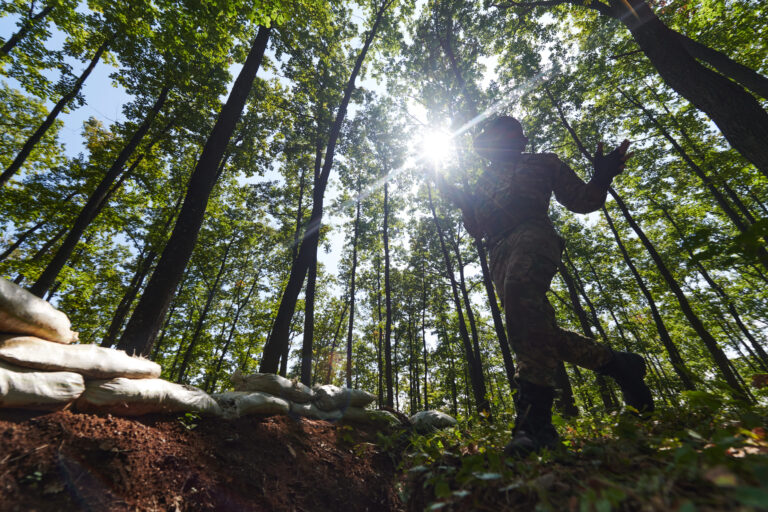
Elite Special Operations teams were navigating through everyday civilian spaces spanning several states, frequently conducting operations under the cover of darkness, often without any identifiable insignia, and offering only minimal clarification to the public.
What Was Jade Helm 15 Intended to Accomplish?
As per statements from the Pentagon, Jade Helm 15 represented a comprehensive military training maneuver carried out from July through September 2015. It featured collaboration between the U.S. Army Special Operations Command and specialized units from the Marine Corps and Air Force. The primary objective was to replicate operational scenarios in lifelike settings, encompassing both metropolitan and countryside environments.
The training unfolded over a vast area including Texas, Arizona, New Mexico, Utah, Nevada, Colorado, Mississippi, and Florida. Texas emerged as the focal point of intense scrutiny, largely because of maps that were leaked, which categorized various states as either ‘hostile’ or ‘permissive.’ Notably, Texas was marked in red on these documents.
Army representatives subsequently clarified that these designations held no political connotations and were purely elements of a hypothetical training scenario. However, this reassurance failed to alleviate public apprehensions. When official entities designate portions of their own nation as hostile, even hypothetically on a map, it prompts citizens to contemplate how swiftly such classifications might transition from simulation to reality. Historical precedents demonstrate that governments seldom devise preparations for contingencies they deem utterly improbable.
Additionally, the Pentagon provided assurances to the populace that service members would not be equipped with live rounds and that non-combatants would remain safe from any targeting. On the surface, these commitments appeared soothing, yet they simultaneously provoked a more profound worry: if no genuine threats existed, why was it essential for troops to integrate so seamlessly into routine civilian surroundings?
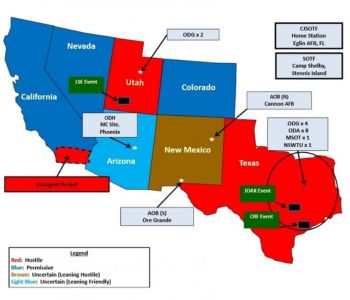
The Escalating Controversy in Texas
Texas found itself at the epicenter of the uproar following the emergence of confidential training maps that depicted the state as hostile terrain within the context of the exercise. Although military spokespeople later emphasized that this labeling was entirely fictitious, such statements offered scant comfort to many residents of the Lone Star State.
What justification could the federal government possibly have for nonchalantly portraying sections of its own territory as adversarial? This approach treads dangerously close to unacceptable territory, even in the realm of simulations, unless the underlying concept had already been deliberated and endorsed in private high-level discussions.
The language employed resonated deeply with a populace steeped in recollections of past federal encroachments and fiercely committed to upholding constitutional safeguards. Once these maps entered the public domain, the discourse transcended mere logistical aspects of training. It evolved into a profound examination of underlying attitudes, potential objectives, and the precarious ease with which ordinary citizens might be recategorized amid shifting circumstances.
Governor Greg Abbott took decisive action by directing the Texas State Guard to oversee the proceedings. His address was measured and thoughtful, yet its intent was unmistakable. The people of Texas refused to unquestioningly embrace federal declarations absent independent verification. Abbott underscored that locals merited full disclosure and affirmed the state’s duty to guarantee that federal endeavors did not infringe upon legal or constitutional standards.
This gubernatorial intervention validated the apprehensions harbored by numerous citizens. The issues at hand were substantial enough to warrant surveillance, and the inquiries posed were weighty enough to necessitate state-level engagement. When a state’s chief executive deems it prudent to scrutinize a military drill within its borders, it conveys a subtle yet resounding message that reliance on mere assurances is insufficient.
Understanding the Unique Public Backlash
The apprehension enveloping Jade Helm did not materialize in a vacuum. It was forged through years of progressively broadening federal oversight, heightened monitoring of citizens, and a mounting perception that pivotal choices were being formulated without substantive involvement from the populace.
By the year 2015, faith in governmental and institutional frameworks had already become tenuous, particularly among those attuned to developments in emergency authorities and national planning strategies. Special Operations personnel are conditioned for irregular warfare and covert assignments. They excel in stealthy traversals, intelligence collection, and improvisation in antagonistic settings where alliances cannot be presumed.
Observing these precise skill sets being practiced domestically within the United States engendered profound discomfort for many. This training diverged sharply from exercises focused on disaster response or aid distribution. It resembled rehearsals for functioning amid a populace that might lack full awareness or full cooperation.
For a significant swath of Americans, this epiphany represented a critical threshold. The rationale stems from the implications of a military apparatus honing techniques to maneuver undetected among its own countrymen. Such practices compel uncomfortable interrogations that defy simple dismissal. They compel reflection on the demarcation between safeguarding the public and exerting dominion, as well as the identity of those empowered to redefine that demarcation.
Compounding the difficulty in downplaying these worries was the profile of the voices amplifying them. A substantial number of detractors possessed firsthand military experience. They were intimately familiar with training protocols, the imperatives of operational authenticity, and hierarchical command dynamics. Crucially, they recognized that elevating realism to paramount status frequently relegates civilian supervision to secondary concern.
This insider perspective eroded the residual confidence many still held in established systems. The dread was not of an abrupt coup but rather of a more insidious, incremental process wherein liberties are incrementally curtailed under the banner of exigency and seldom reinstated in full once the purported crisis subsides.
Fears of Impending Martial Law
Jade Helm 15 proved revelatory by illuminating the advanced stage of domestic emergency readiness already underway within the United States. The drill incorporated premier military detachments practicing traversal of populated zones, utilization of alternative communication pathways, and execution of missions with minimal public cognizance. These precise parameters mirror conditions prevalent when civilian governance falters and federal dominance intensifies.
The federal apparatus candidly upholds contingency frameworks for internal crises encompassing civil disturbances, breakdowns in critical infrastructure, and breakdowns in societal order. Such frameworks prioritize rapid response and command assumption over deliberative public discourse. When top-tier military contingents hone domestic civilian operations, it underscores foresight for epochs where conventional jurisdictional lines dissolve.
Consider insights from Terry, a retired Green Beret with extensive U.S. Army Special Forces tenure. He has cautioned that amid Martial Law declarations, proactive preparations might inadvertently draw scrutiny instead of conferring security. Through a tactical lens, civilians possessing weaponry or stockpiled provisions are frequently regarded as custodians of assets warranting sequestration. In these contexts, imperatives of order and adherence supersede personal entitlements. Terry advocates a straightforward precautionary measure to fortify one’s residence preemptively.
Individuals oriented toward self-reliance grasp this trajectory intimately, as historical records repeatedly illustrate the sequence. Liberties contract amid crises, enforcement precedes explication, and post-stabilization authority seldom reverts fully. By the juncture citizens discern the alterations, the apparatuses are firmly entrenched.
Trump Era Perspectives on Military Confidence
During President Trump’s second administration, a broad consensus among Americans persists in perceiving the military as a bulwark against external aggressors rather than an instrument for overseeing domestic affairs. Trump has consistently championed bolstering armed services capabilities, honoring veterans’ sacrifices, and reinvigorating esteem for defense establishments.
For many, this rhetoric buttresses assurance that martial might is oriented toward national defense from abroad, eschewing entanglement in internal governance. Paradoxically, this very assurance renders retrospection on Jade Helm all the more disquieting. It is worth noting that the operation transpired neither under Trump’s command nor during his initial tenure; it was conceived and executed under the preceding Obama presidency, amid perceptions of augmenting federal purview and diminishing public credence in officialdom.
Contemporary discourse frames Jade Helm within that milieu, interpreting it as symptomatic of a larger pivot toward consolidated authority and intramural contingency postures. Nonetheless, present-day relevance transcends partisan occupancy of executive offices. Protocols sanctioned in prior eras persist within enduring institutional frameworks, poised for swift mobilization amid evolving exigencies. Leadership approbation notwithstanding, latent capacities harbor inherent perils.
Lasting Impacts Post-Jade Helm Conclusion
Jade Helm formally concluded in September 2015, yet one critical ramification endured beyond its termination. The undertaking accustomed both officials and the public to expansive domestic troop deployments executed with scant forewarning or explication, subsequently rationalized as standard procedure.
Preceding Jade Helm, an operation of comparable magnitude deploying Special Operations elements through residential locales would have prompted robust, proactive public notifications. Post-Jade Helm, reticence emerged as a viable norm. In subsequent years, military publications increasingly invoked concepts like ‘homeland complexity’ and ‘gray zone environments.’
These doctrinal phrases delineate contexts wherein distinctions between overseas perils and internal disruptions blur. Non-combatant demographics cease being presumed reliable partners; they morph into unpredictable elements within the equation. Jade Helm additionally appraised societal responses: the velocity of alarm dissemination, gubernatorial countermeasures, media portrayals, and attenuation of interest spans.
From a strategic vantage, such intelligence proves priceless. It delineates feasible overt maneuvers, imperatives for discretion, and durations of sustained scrutiny. Arguably, this constitutes Jade Helm’s most perturbing bequest-not merely troop acclimation, but systemic calibration.
Undeniably, Jade Helm 15 constituted an authentic military undertaking, mobilizing tangible personnel through veritable municipalities under veils of confidentiality. Pertaining to martial law speculations, while no overt substantiation surfaced publicly, undertakings of this magnitude and character epitomize the protracted prelude to formal impositions.
Equally factual is the chasm in mutual reliance it laid bare between populace and establishments. It underscored the rapidity with which assurance dissipates upon perceptions of exclusion from communally germane determinations. Dismissing all disquiet as fabrication elides legitimate interrogatives. Conversely, positing the drill as irrefutable harbinger of usurpation overreaches. Veracity inhabits the tense interstice betwixt polarities.
Enduring Relevance Today
Jade Helm 15 endures as a poignant admonition of domestic military potency-tangible, operational, and perpetually evolving. Successor initiatives may eschew conspicuous nomenclature, manifesting unobtrusively under alternate rationales tied to emergent crises. Vigilant recallers of 2015 will discern portents anteceding the oblivious.
Fundamentally, Jade Helm illuminated the alacrity with which ‘training’ regimens can envelop authentic neighborhoods while households persist uninformed. Amid surreptitious deployments, prudent countermeasures entail discreet readiness, preempting pandemonium, scarcities, and abrupt strictures that transmute quotidian existence into frenzy.
Envision a nocturnal grid blackout persisting indefinitely: those possessing reserves of hydration, thermal sources, sustenance, and composed methodologies will navigate inaugural 72 hours alongside kin unbroken. Succinct expositions from cognoscenti delineate anticipated sequelae and accessible, pragmatic protocols for households to maintain equilibrium amid electrical cessation, service interruptions, and impediments to fiscal and material procurement.