Featured Content



Editor's Pick


Enter your email address below and subscribe to our newsletter

Your Next Move, Planned.
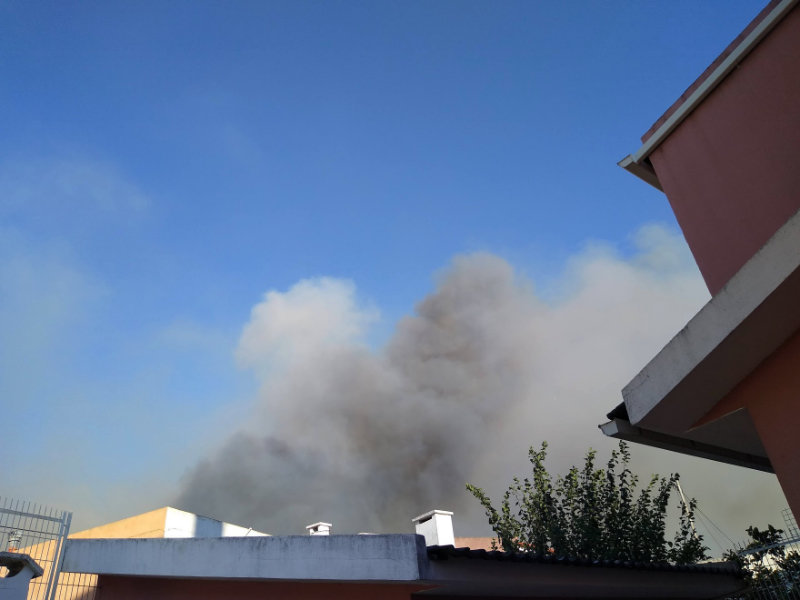
One of the most striking aspects of forest fires is the profound sense of helplessness that overtakes you when you’re mere inches from a raging blaze.
I didn’t truly grasp the gravity of the danger posed by forest fires until just three days ago, but that experience taught me the lesson in an instant.
To begin with, forest fires show no mercy whatsoever. It all kicked off with a subtle scent reminiscent of a backyard barbecue as I walked around the garden, but in less than ten minutes, ash began filling the sky, mimicking a poisonous version of winter snowfall.
The shift in my mindset from mild interest to urgent action-packing up the cats and snatching the passports-happened in mere seconds.
I’ve never been more grateful for having bug-out bags prepared and a reasonably reliable system in place for handling environmental disasters. Moments like these highlight exactly why preparedness is invaluable.
Dealing with scenarios like this is incredibly challenging-when exactly do you decide to evacuate? What essentials do you prioritize? I can’t offer universal guidance since every situation is unique, but I can share precisely what steps I took during the event.

My initial move was to retrieve the two bug-out bags, position them in the office, and quickly add my passports and cash from the safe.
Meanwhile, my partner gathered all five cats, separated them into two rooms-since not all of them are fully compatible yet-with windows and doors sealed shut, and set out the carriers open and prepared for immediate use.
When evacuating with pets, the key is to minimize unpredictability, so isolating them in known locations while having transport options immediately accessible creates the most efficient arrangement.
Much like navigating everyday life, you can’t approach emergencies halfway. It’s essential to establish a clear strategy and predefined thresholds for action. Start by evaluating the proximate threat level.
If the peril is so near that there’s a genuine risk to life, evacuate immediately and formulate further plans from a secure spot.
In this case, the vicinity was swarming with firefighting aircraft, helicopters, and fire engines racing through the streets. Additionally, the wind direction was favorable, blowing smoke away from our property, and the emergency responders were operating at peak efficiency, allowing me to keep bug-out preparations handy while monitoring developments closely.
I noticed six neighboring households, each responding in distinctly different manners, providing some insightful observations for consideration.
This individual hopped into the car with his spouse, positioned it just outside the driveway, and kept the engine running throughout.
Analysis: This was arguably the most intelligent approach, though impractical for us with five cats in the sweltering Portuguese summer heat. Still, it’s a strategy worth adapting to fit family-specific needs.

She contacted friends from the area, who arrived, parked nearby, and stayed with her inside the house, likely monitoring news updates on television.
Analysis: At 85 years old, this made perfect sense from her viewpoint. Recognizing personal limitations and seeking assistance proactively is crucial.
They appeared completely relaxed indoors, with no visible signs of an evacuation plan from what I could observe.
Analysis: It’s not fair to judge harshly, as they might have been thoroughly prepared like myself. From an external view, I was lounging on the patio, enjoying a cigar, and documenting the chaos with photos.
The point is, maintaining composure while observing events doesn’t necessarily indicate indifference or foolishness; it could simply reflect confidence in existing contingency measures.
I must confess that much of my own calmness stemmed from the impressive, all-out efforts of the firefighters-genuine everyday heroes.
This neighbor spent the whole time out on the street, engaged in phone conversations, with children also outside and no evident structured plan, just apparent low-level worry.
Analysis: I greeted her, and she appeared deeply distressed. It’s unclear if she intended to depart or arrange transport, but it seemed she was uncertain about the next steps.

Details are fuzzy, but evidently some distracted driver, fixated on the smoky spectacle, lost control and collided with a wall or another vehicle back at the estate.
Analysis: Avoid foolish distractions while driving, particularly amid a wildfire emergency. This cannot be emphasized enough.
This reaction was particularly amusing: while I relaxed on the patio, my partner spotted a man climbing onto his roof to spray it down with a garden hose.
No exaggeration whatsoever.

That’s the evidence right there.
Analysis: When a massive, uncontrollable blaze approaches, a standard hose offers no protection for you or your home.
Pragmatically, I can’t fully explain his reasoning. The most logical guess is that fear prompts action, even if illogical. Scaling a roof to wet it down when professional services are overwhelmed is downright reckless.

As for my partner and me, we donned masks to avoid prolonged smoke inhalation, which is harmful to health, kept our close contacts informed, and captured photographs along the way. With a solid action plan already executed, I felt secure enough to adjust our response up or down without descending into panic, thanks to all critical items being prepped and accessible.
My preparations and reaction speed proved exceptionally effective; from recognizing the severity to fully activating protocols with five cats in tow, the entire process took under three minutes.
This is no overstatement. The sole shortfall was lacking two additional cat carriers-one for the kitten to share temporarily, and another for the backpack option. Far from perfect, but I’ve since addressed this and expect delivery shortly.
My partner kept the carriers perpetually ready in a closet, underscoring how vital such readiness is-it’s impossible to overemphasize.
Owning pets entails serious responsibility, and true ownership demands a robust evacuation strategy to safeguard them during crises.

Equally important is centralizing passports, cards, and vital documents for swift access.
I maintain a filing cabinet for replaceable papers and a compact fireproof safe for essentials: all passports, a binder with bank cards, and duplicates of birth and marriage certificates. In the chaos of a fire, you don’t want the added stress of hunting for these items.
Planning for inevitable losses is wise too, since evacuating everything isn’t feasible. I’m reasonably content letting my PC go up in flames, backed by secure offsite data storage.
Belongings follow the same logic-that’s the purpose of insurance. Countless accounts describe people suffering injuries or worse by delaying escape to pack unnecessarily.
Prioritize wisely: equip bug-out bags, devise plans for loved ones including pets, and disregard the rest.