Featured Content



Editor's Pick



Enter your email address below and subscribe to our newsletter

Your Next Move, Planned.
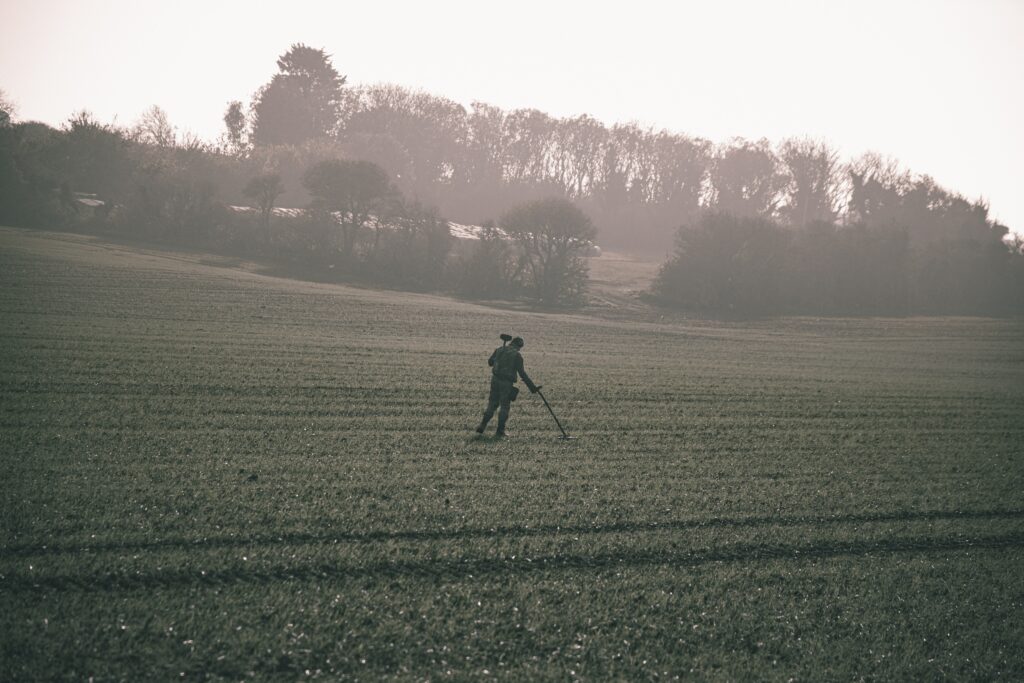
Numerous abilities can significantly boost our survival prospects, ranging from evident ones such as sophisticated life-saving methods to those that might not immediately appear essential yet could prove extraordinarily useful under specific conditions. This guest contribution explores the topic of metal detecting, highlighting its importance within your comprehensive preparedness strategy.
For individuals focused on preparedness, there are always particular competencies that require enhancement, frequently necessitating the acquisition of specialized gear to proficiently develop those abilities. In scenarios like TEOTWAWKI, WROL, SHTF, grid-down events, or even a hypothetical zombie outbreak, achieving true mastery in any discipline demands extensive time and dedicated practice. For beginners or intermediate preppers, it is wise to embrace the classic proverb from childhood: “jack of all trades, master of none.” This approach is vital for rapidly expanding and refining your array of survival skills, particularly amid today’s uncertain global landscape. Essentially, acquire the knowledge but avoid the pressure of becoming an expert in every area.
This philosophy introduces the concept of TPS, or Tertiary Prepper Skills. These represent abilities that can be acquired over a weekend or two before progressing to others. Often, TPS are neglected, relegated to the margins of your preparedness checklist or dismissed as “someday” tasks. The wider and more profound your repertoire of skills becomes, the greater your value as an asset in survival situations. For instance, proficiency in five such tertiary disciplines might determine whether you secure a position in a mutual assistance group (MAG) or maintain your place within one. If you operate solo with your family, you must embody the jack-of-all-trades role. Mastering these TPS could ultimately decide the outcome for you and your loved ones during a disaster.

Upon initial consideration, metal detecting is unlikely to rank high on most preppers’ lists of essential skills. It often conjures images of elderly enthusiasts waving odd devices along beaches, occasionally stooping to retrieve a stray penny. Yet, equipped with the appropriate device and operated by a competent handler, a skilled metal detector user would be an invaluable member of any mutual assistance group, tribe, or prepper community. In fact, their expertise might one day preserve lives.
In military contexts, particularly the Army, the principle of “shoot, move, and communicate” forms a foundational doctrine essential for combat specialists’ survival and mission success. Extensive literature exists on this topic, and for those unfamiliar, exploring it could provide beneficial insights for future preparedness.
In prepping scenarios, there may come a time when you need to execute precisely that: shoot, move, and communicate effectively. Many understand the necessity of reliable weaponry to cover the “shoot” element across various global crises. For “move,” robust merino wool socks paired with durable tactical boots might seem sufficient. Regarding “communicate,” compact handheld HAM or FRS radios often meet basic needs. With such gear, individuals might feel confident in small teams of three or four during assaults or advancing in wedge formations over open terrain. Despite investing in this equipment, countless hours at the range, and radio field exercises, have you pondered the inherent risks associated with movement?
Veterans from recent overseas conflicts have painfully discovered that adversaries unable to halt shooting or communication will exhaust every option to impede movement. Halting an enemy’s mobility neutralizes the threat, even if briefly. Consequently, a metal detector emerges as indispensable equipment for any prepper collective, enhancing safety protocols significantly.
Imagine your prepper group acquires a 30-acre field adjacent to your training site from a financially strained family post-WROL. Through barter, you finalize the transaction with a handshake, and the previous owners depart reluctantly. Celebrations ensue as the group has secured the land at a fraction of its value. Seems ideal, does it not? Perhaps, but consider if the resentful sellers scattered 12-gauge shotgun shell booby traps and two dozen #15 spring-loaded bear traps across the property, aiming to retake it later. Here, a metal detector proves utterly priceless. Films like Megan Leavey and The Hurt Locker vividly depict buried ordnance and pressure-activated traps designed for devastating impact.
A capable metal detector operator can swiftly identify both ferrous metals like iron and non-ferrous varieties including aluminum, copper, gold, lead, nickel, platinum, silver, tin, titanium, and zinc. Such a specialist not only bolsters group safety through hazard detection but also enables recovery of misplaced metallic items. As a tertiary prepper skill, beginning to familiarize yourself with metal detectors is advisable without delay. Alternatively, to bypass the initial learning phase, seek out a reliable, aligned prepper with over five years of hands-on experience and integrate them into your team. Below is an extensive enumeration of items-dropped, lost, buried, or concealed-that a veteran detectorist might locate amid TEOTWAWKI chaos:
The metal detector market offers a vast selection, from multi-frequency models to VLF (very low frequency or single-frequency) units and PI (pulse induction) systems. Options span land-based, underwater, and waterproof varieties. Land detectors might pinpoint minute gold nuggets in arid regions or identify battlefield landmines. Selection ultimately hinges on your financial constraints. Quality detectors range from about $75 to over $5,000. Before purchasing, visit local metal detecting clubs to explore options within your budget. Express your novice status and interest in the hobby-while perhaps discreetly omitting prepper motivations, such as retrieving tractor keys during a zombie pursuit.
Local clubs often feature experienced members eager to mentor newcomers, allowing hands-on trials of various machines and detailed discussions of their advantages and drawbacks. You might even discover the perfect addition to your mutual assistance group through these connections.
Mastering metal detecting requires no advanced scientific knowledge, though a modest learning curve exists for grasping the terminology. Resources like YouTube tutorials, specialized magazines, and clubs make it accessible. Quickly attain proficiency in this TPS and refine your abilities over time to achieve high competence.
Remain resilient, continually acquire fresh tertiary prepper skills, and enjoy the hunt!
By Sgt. Silverman