









Your Next Move, Planned.

Essential Guide to Disaster Communication
Help Others Prepare
The Premise
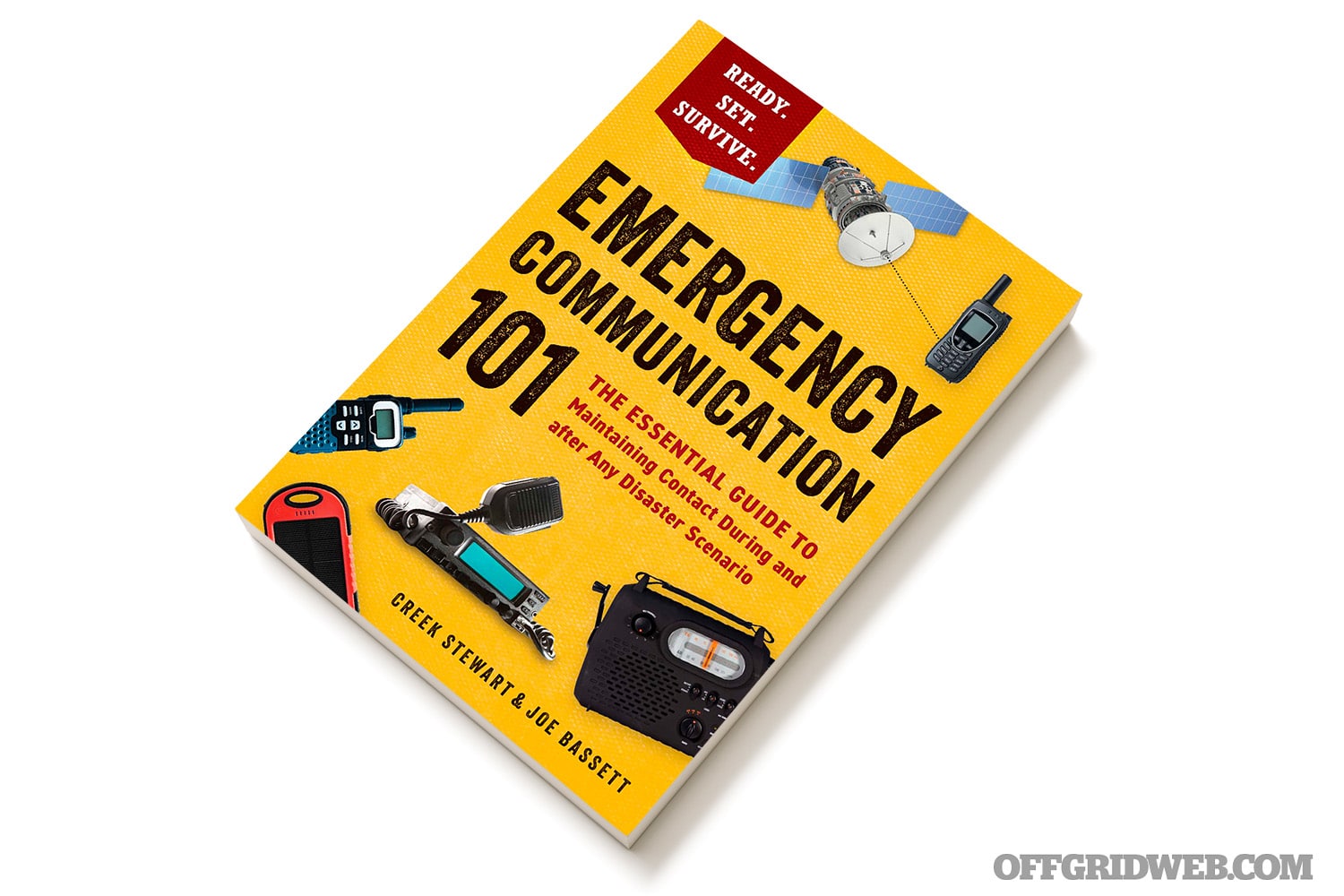
Emergency Communication 101 addresses a fundamental challenge that escalates dramatically during catastrophic events. When electrical grids collapse and cellular towers cease functioning, the vast majority of individuals lack any effective means to connect with others beyond the range of their voice. Authored by Creek Stewart and Joe Bassett, this guide targets novices seeking a solid groundwork in independent communication strategies. The authors meticulously guide readers through the critical importance of emergency comms, the rudimentary principles behind radio operations, and the array of devices capable of linking family members together even as the pillars of contemporary infrastructure vanish abruptly.
The book emphasizes that in times of crisis, the ability to transmit and receive information can mean the difference between swift recovery and prolonged hardship. Stewart and Bassett break down complex concepts into digestible segments, ensuring that even those with zero prior knowledge can grasp the essentials. They highlight real-world scenarios where communication breakdowns have led to unnecessary suffering, underscoring the need for personal preparedness that doesn’t hinge on vulnerable public systems.
The Breakdown
From the outset, the publication underscores the inherent vulnerabilities within today’s communication frameworks. The writers detail precisely what transpires when mobile networks crumble under disaster pressures, elucidate why conventional online messaging platforms disintegrate entirely, and illustrate how this sudden information blackout hampers emergency responses and complicates efforts to reunite separated loved ones. This opening segment drives home a pivotal survival principle: dependence on interconnected infrastructures, reliant on myriad interdependent components, is a recipe for failure when disruptions occur.
Building on this foundation, Stewart and Bassett pivot to resilient alternatives, spotlighting radios and satellite-based technologies that function autonomously, free from reliance on standard commercial networks. These tools, they argue, empower individuals to maintain vital links regardless of widespread outages.
A substantial chapter delves into the diverse categories of radios and their real-world applications. Comprehensive coverage spans amateur (ham) radios, Citizens Band (CB) units, General Mobile Radio Service (GMRS) devices, and basic handheld two-way walkie-talkies. For each type, the authors provide clear guidance on suitable users, primary functions, and optimal usage scenarios. This structured approach demystifies the often bewildering array of radio choices, rendering the field approachable for absolute beginners. Key details include necessary licensing protocols, anticipated transmission distances under various conditions, ease of transport, and essential operational protocols to ensure courteous and efficient interactions on shared frequencies. This accessibility is a hallmark of the book’s strength, transforming what might seem like esoteric expertise into a straightforward, learnable proficiency.
Beyond hardware selection, the text ventures into sustaining these devices through power management strategies tailored for crises. Discussions encompass solar-powered generators, compact rechargeable battery packs, lightweight photovoltaic panels, and dedicated reserve power units. Rather than overwhelming readers with intricate electrical engineering principles, the authors deliver pragmatic, situation-specific recommendations. This enables users to select and deploy power solutions aligned with their anticipated emergency environments, whether urban blackouts or remote wilderness isolations. For those stepping into off-grid energy for the first time, these sections offer reassuring, actionable insights that safeguard comms longevity.

Central to the guide is the development of a robust family or group emergency communication protocol. Stewart and Bassett methodically outline steps for pinpointing critical contacts, establishing alternative rendezvous locations, allocating specific roles among members, and layering in multiple fallback communication channels. They advocate strongly for built-in redundancies-such as combining radios with visual signals or prearranged codes-and advocate for regular practice sessions to ingrain equipment familiarity. The tone remains entry-level yet highly applicable, prioritizing user-friendly checklists, quick-implementation tactics, and incremental progress over esoteric tactics reserved for experts.
Throughout, the authors weave in practical examples drawn from historical disasters, illustrating both common pitfalls and proven successes. This narrative style not only educates but also motivates, showing how ordinary people have leveraged basic tools to navigate chaos effectively. They also touch on antenna basics, signal enhancement techniques suitable for novices, and simple troubleshooting for common issues like interference or battery drain, ensuring readers feel equipped to handle initial hurdles.
The Verdict
Emergency Communication 101 stands out as an ideal entry-level resource for individuals who have yet to experiment with radios or fully appreciate the precarious nature of our daily communication dependencies. Its beginner-centric approach builds essential knowledge without prerequisites, fostering the confidence needed to assemble a basic setup. However, seasoned enthusiasts already versed in amateur radio operations, GMRS configurations, or standalone power systems may find the material somewhat elementary, as it deliberately avoids plunging into sophisticated theories or elite-level protocols.
This isn’t positioned as an exhaustive treatise on cutting-edge radio engineering or comprehensive crisis network design. Instead, it functions as a welcoming orientation, clarifying fundamentals, instilling assurance, and providing a concrete launchpad for further exploration. For its target demographic of newcomers, the execution is spot-on, delivering clarity and momentum toward self-reliant comms proficiency.
In broader terms, the publication fulfills its stated objectives admirably. It equips readers with core competencies and propels them toward actionable preparedness, emphasizing that reliable information exchange during disasters starts with personal initiative rather than waiting for external aid. Whether facing natural calamities, civil disturbances, or technological failures, the principles outlined here form a timeless bedrock for staying connected when it counts most.
About the Book
Book & Author: Emergency Communication 101 by Creek Stewart & Joe Bassett
Publisher: Adams Media
MSRP: $19 paperback
Pages: 224
Rating: Thrive | Survive | Die