




Your Next Move, Planned.

Car Bulletproofing Costs: Protection Levels & Pricing Guide
Help Others Prepare
How Much Does It Cost to Bulletproof a Car?
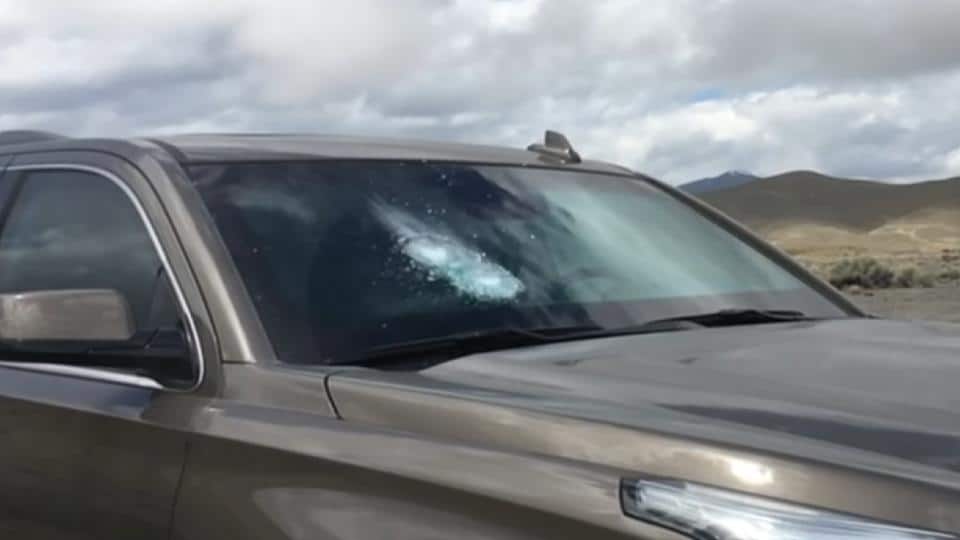
Violent daylight robberies pose significant risks to personal safety, and recent incidents have highlighted the critical role armored vehicles play in distinguishing between survival and tragedy. Criminals frequently wield powerful firearms, raising the essential question of what measures are necessary to prevent bullets from breaching a vehicle’s structure. Specialized hard materials combined with precise engineering expertise convert ordinary automobiles into fortified sanctuaries capable of withstanding ballistic threats.
While this concept might appear extravagant, it remains entirely feasible for drivers requiring such advanced safeguards. Many vehicle owners have pondered the financial implications involved in this process, specifically inquiring about the overall expense of bulletproofing a car. This comprehensive analysis delves into the precise figures and details to provide clarity on the investment required.
Transforming a standard car into a fully armored unit demands a substantial financial commitment, typically ranging from about $16,000 to $50,000 or more. These figures can fluctuate considerably based on the desired degree of ballistic resistance and the specific components selected for reinforcement.
The following outlines the pricing structures for the most commonly selected ballistic protection standards tailored for civilian vehicles, ensuring a thorough understanding of each tier’s capabilities and associated costs.
B4 Protection Level
Lower-tier ballistic ratings such as B1, B2, and B3 exist but are seldom applied to civilian armored vehicles due to their limited effectiveness against modern threats. B4 represents the entry-level protection that appeals to the majority of private vehicle owners seeking practical defense.
This rating effectively resists impacts from common handguns and certain sporting rifles, including calibers like .44 Magnum, .357 Magnum, 9mm, .38 Special, and 12-gauge shotgun rounds. It performs reliably against lower-velocity projectiles, particularly those fired from close distances where threats are most immediate.
Upgrading to B4 ballistic protection generally costs around $40,000. This comprehensive package typically encompasses armored reinforcements for the rear seating area, doors, and windows, with optional add-ons available to customize further based on individual needs.
B5 Protection Level
Advancing to B5 offers enhanced defense specifically calibrated to counter rifle rounds such as 5.56 x 45 TL 178 mm +/- 10 caliber, along with various assault weapons commonly encountered in high-risk scenarios. Achieving this standard necessitates armor plating approximately 7.5 mm thick to ensure reliability.
Priced higher than B4, B5 upgrades typically exceed $40,000 and provide superior resistance to explosive devices like grenades as well as sustained rifle fire. Standard inclusions in a B5 vehicle package feature run-flat tire systems, robust steel body panels, and glass layers measuring 3 to 5 inches in thickness. The run-flat technology allows continued mobility even after encountering road spikes or tire punctures from gunfire.
Customized B5 configurations might incorporate additional features such as high-decibel siren alerts, protected fuel tanks, and strengthened door mechanisms. Overall budgets for these enhancements can span from $40,000 up to $100,000, depending on the extent of modifications.
B6 Protection Level
B6 constitutes an elite tier of ballistic security engineered to repel armor-piercing ammunition from weapons including the AK47 and R5 rifles. This level demands a significant investment, often starting at $100,000 and climbing higher with customizations.
Key components include heavy-duty steel plating throughout the vehicle’s body structure and 38 mm thick armored glass for all windows. The added mass, exceeding 2,600 pounds, frequently necessitates upgrades to the braking system and suspension to maintain safe handling and performance, contributing to the elevated price point compared to lower levels like B5.
B7 Protection Level
As the pinnacle of civilian ballistic protection, B7 is designed to thwart high-velocity armor-piercing rounds from advanced rifles, encompassing sniper-grade ammunition such as 7.62×51 TL 254mm +/-10 caliber. The glass layers (BRG) measure between 72 and 78 mm thick, complemented by steel reinforcements from 9.2 to 14.2 mm.
For non-military applications, B7 marks the uppermost viable protection standard. Expenses for this elite bulletproofing surpass $100,000, with potential for even greater outlays due to the extensive weight increase-often over 4,000 pounds-which requires comprehensive chassis, brake, and suspension reinforcements to ensure operational integrity.
Bulletproofing Costs by Vehicle Type
The financial outlay for armoring a vehicle varies markedly according to its model and category, as well as the selected protection rating. Larger or more complex designs inherently demand more materials and labor, influencing the total price. Below are estimated costs for popular vehicle classes across B4 and B6 levels.
Single Cab Truck
For single cab trucks, B4-level 360-degree cabin armoring begins at roughly $24,000, with roof armor around $1,500 and floor armor approximately $2,000. Escalating to B6, the 360-degree cabin protection rises to about $37,000 or more, roof armor to $2,500+, and floor armor to $2,000+.
Double Cab Truck
Double cab trucks under B4 see 360-degree cabin armor starting at about $31,000, roof armor at $2,000, and floor armor at $2,500. B6 equivalents commence at around $48,000 for cabin armor, $3,800 for roof, and $3,400 for floor protection.
Medium SUV
Medium-sized SUVs with B4 armoring cost from $40,000 for full cabin coverage, $2,400 for roof, and $2,800 for floor. B6 upgrades for these vehicles approximate $52,000 for cabin, $3,800 for roof, and $4,500 for floor armoring.
Large SUV
Large SUVs begin B4 packages at $42,000 for 360-degree cabin armor, $2,700 for roof, and $3,100 for floor. B6 configurations demand about $60,000 for cabin, $5,100 for roof, and $6,100 for floor reinforcements.
Sedan
Sedans typically max out at B4 protection, with costs starting from $43,000 for comprehensive cabin armoring, $2,000 for roof, and $2,500 for floor protection, reflecting their more compact structure.
Bulletproofing Costs by Component
For those operating under budget constraints, selective reinforcement of critical areas can deliver effective protection without full-vehicle overhauls. The subsequent breakdown details expenses for individual armored elements.
Windows
Armored glass for automotive windows ranges from $3,000 to $20,000, largely dictated by thickness and rating. Budget-friendly B4 glass measures about 22 mm, while premium B6 or B7 variants extend from 38 mm to 78 mm for maximum resistance.
Doors
Doors require fortification beyond windows for complete coverage, with fully armored units starting at $8,000. Prices adjust according to protection level and the extent of internal reinforcement provided.
Tires
Standard tires succumb quickly to gunfire, underscoring the value of run-flat systems that permit escape post-impact. These tires maintain structural integrity under zero pressure, supporting travel for a safe distance. Pricing per tire falls between $200 and $500, and they come standard on select high-end models.
Bull Bars and Ballistic Grille
Bull bars enable ramming through roadblocks erected by attackers, while ballistic grilles shield the radiator from projectiles. Together, these forward defenses start at around $2,000, bolstering frontal vulnerability.
PA System
A public address system facilitates secure external communication without exposing occupants, eliminating the need to open doors. High-quality installations begin at approximately $1,000, serving as a practical safety enhancement.
Frequently Asked Questions
What Constitutes an Armored Vehicle?
Armored vehicles feature bullet-resistant modifications using durable materials to endure high-speed bullets and explosions. Unlike overt military designs, civilian versions maintain a discreet appearance for everyday usability.
Is Every Car Model Suitable for Bulletproofing?
The vast majority of passenger cars and SUVs can undergo armoring, though costs differ by design. Sedans often prove less expensive than SUVs due to smaller surface areas and reduced demands on structural upgrades like brakes and suspension.
Reasons to Invest in Vehicle Armoring
An armored car functions as a portable secure enclosure, safeguarding passengers amid active shooter incidents, terrorist threats, criminal assaults, or societal disruptions. High-profile individuals like political figures rely on them to mitigate assassination risks and unrest.
Comparing Costs: Armoring vs. Purchasing Pre-Armored
Factory-armored vehicles may carry a premium over aftermarket conversions. For instance, a base Ford Raptor costs about $54,000, with armoring adding $40,000 to $50,000, totaling around $120,000-matching or exceeding pre-built armored equivalents.
Conclusion
Research indicates that bulletproofing expenses generally span $16,000 to $50,000 or beyond, influenced by vehicle specifics and protection tiers. Selective component upgrades or higher ratings can elevate totals further. Notably, retrofitting often presents a more cost-effective alternative to acquiring manufacturer-armored models, offering tailored protection aligned with personal security requirements.