






Your Next Move, Planned.

12 Key Reasons to Include Solar Cooking in Off-Grid Plans
Help Others Prepare
Have you ever pondered whether the sun’s rays could prepare your family’s evening meal, or how you might prepare food during an extended power failure without relying on traditional fuels? This detailed exploration examines the reasons a solar cooker serves as an essential off-grid cooking appliance for your household, along with key factors to evaluate prior to acquiring one. By the conclusion, you will possess a thorough comprehension of whether solar cooking represents a supplementary off-grid cooking alternative suitable for your loved ones.
12 Reasons to Integrate a Solar Oven into Your Preparedness Strategy
Let’s explore in depth the compelling rationale for incorporating a solar cooker into your home setup, enhancing your readiness, promoting environmental sustainability, and providing practical benefits for routine use. You may be astonished by the adaptability and worth of this device in various scenarios!
Picture a scenario where concerns about depleting your supplies of charcoal, propane, or natural gas for meal preparation become obsolete. A solar cooker eliminates the necessity to stockpile extra fuel sources entirely, as its energy source is the abundant, no-cost sunlight available daily. Although it performs optimally on clear, sunny days as a primary cooking method, it also acts as a crucial enhancement to your established off-grid cooking strategies, broadening your choices and reducing dependence on limited, non-renewable resources that could run short unexpectedly.
1. Harnessing Abundant, Cost-Free Sunshine
In contrast to conventional fuels that steadily erode your financial resources over time, sunlight stands out as entirely gratis. After the initial purchase of your solar cooker, ongoing operational costs for its energy supply drop to zero. These financial savings free up funds that can be redirected toward acquiring other vital preparedness essentials or addressing essential family requirements, strengthening your overall resilience.
2. Eliminates Fuel Storage Challenges
You may already be committed to expanding your long-term food reserves, yet accumulating sufficient fuel quantities to sustain cooking for extended periods often presents substantial storage dilemmas, including space constraints and safety risks. Solar cooking circumvents this entirely by requiring no fuel accumulation whatsoever. The liberated storage area can then be repurposed for housing additional critical supplies, optimizing your living space more effectively.
3. A Singular, Long-Term Investment
Upon completing the purchase-or construction, for those inclined toward hands-on projects-of your solar cooker, no further expenditures arise, and upkeep remains remarkably straightforward. This positions it as a true one-off investment that delivers perpetual returns through endless free cooking capacity spanning years. Over the long haul, such economics render it a prudent financial decision for any household.
4. Ensures Safe Cooking in Any Location
Prioritizing safety remains crucial, particularly in off-grid cooking contexts where hazards abound. Solar cookers operate without generating hazardous fumes, open fires, or carbon monoxide risks-purely utilizing solar energy. This clean profile makes it ideal for deployment in diverse settings, from backyards to campsites, without compromising well-being.
5. Enables Water Purification Functions
Extending beyond mere meal preparation, solar cookers prove invaluable for pasteurizing and purifying water. During prolonged crises or official boil-water notices, they can elevate water temperatures sufficiently to eradicate dangerous pathogens, bacteria, and viruses, rendering it potable and safeguarding health when conventional methods falter.
6. Facilitates Harvest Preservation
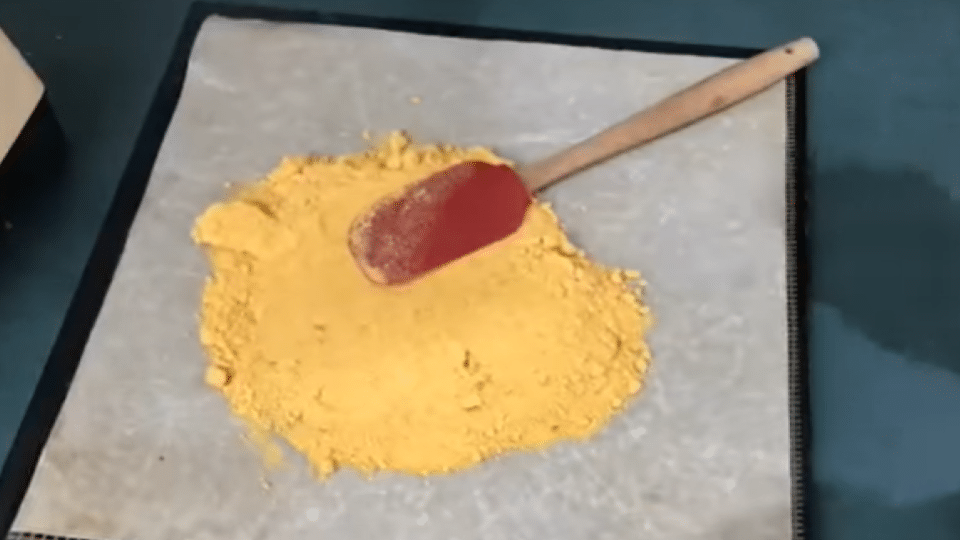
Seeking electricity-free techniques to extend the shelf life of your garden yields? Solar cookers, leveraging solar dehydration principles, excel at drying an array of produce including fruits, vegetables, and even meats. This preservation approach bolsters your food security substantially, transforming seasonal abundance into enduring pantry staples.
7. Offers Broad Cooking Versatility
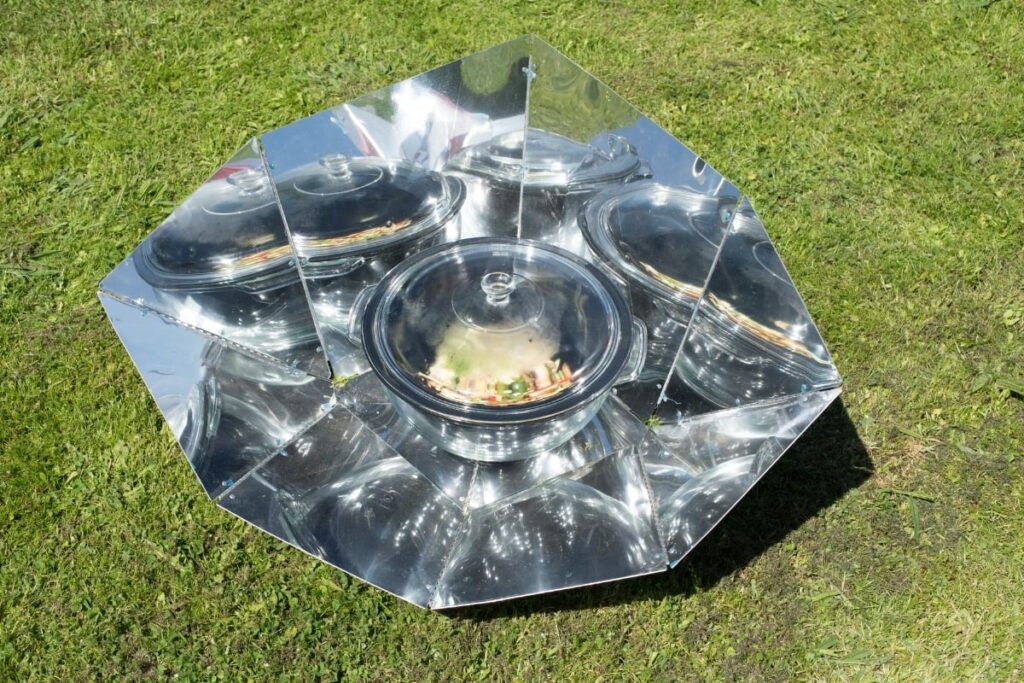
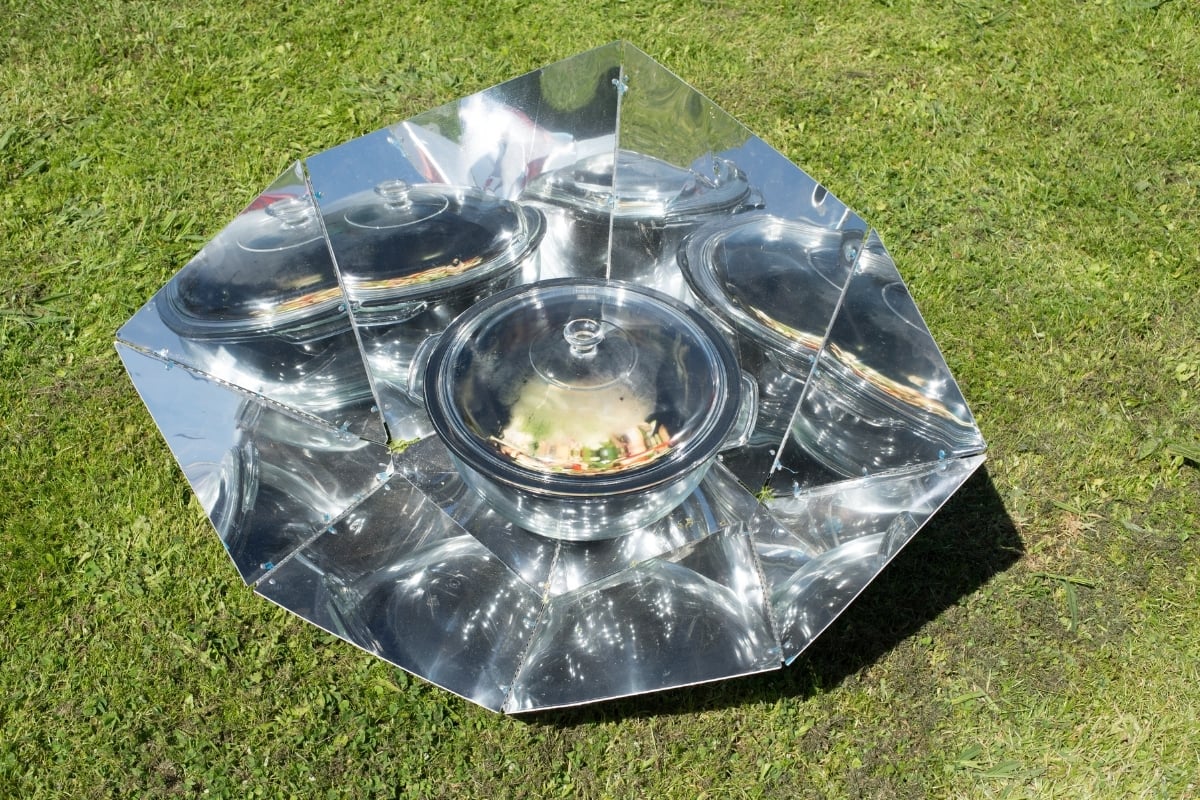
You might question the practical scope of a solar cooker’s capabilities. Its versatility hinges on the model selected and prevailing solar intensity, yet it accommodates a wide spectrum. Box-style solar ovens shine in baking loaves of bread, slow-roasting meats alongside vegetables, and gently simmering hearty stews. Parabolic variants achieve elevated temperatures swiftly, suiting stir-fries or light frying endeavors.
Universal limitations include deep-fat frying or rapidly boiling voluminous water quantities, but for countless family-preferred dishes, solar cookers deliver reliably across diverse culinary needs.
8. Minimizes Food Burning Risks
Have you ever salvaged a dish at the last moment due to momentary distraction? Solar cookers drastically reduce such incidents through their gradual, uniform heating process that coaxes food toward ideal doneness. Realism dictates caution: extreme solar conditions or prolonged unattended sessions, particularly with high-heat parabolic types, could still lead to overcooking. Nonetheless, relative to conventional ovens, burning occurs infrequently, yielding tastier outcomes and curtailing household food waste effectively.
9. Maintains Cooler Indoor Environments
In the peak of intense summer heat, activating indoor ovens exacerbates discomfort. Solar cookers counteract this brilliantly by shifting cooking outdoors, harnessing solar power externally. This strategy preserves a cooler kitchen atmosphere, benefiting both the cooking space and the preparer during scorching periods.
10. Provides Discreet, Silent Functionality
A nuanced yet pivotal perk lies in the solar cooker’s near-silent performance. Absent the clamor of generators or gas burners, it operates undetected. In protracted outages or turbulent events, this stealthy attribute enhances personal security by minimizing audible cues that could attract unwanted notice, preserving operational discretion.
11. Reduces Household Utility Expenses
Despite upfront costs, habitual solar cooking yields substantial offsets against electricity and gas bills. Each sun-powered meal equates to avoided utility payments, with cumulative savings mounting impressively over time, particularly for frequent utilizers.
3 Reasons a Solar Cooker Should Complement, Not Replace, Other Methods
Solar cookers undoubtedly rank as exceptional assets for both emergency readiness and daily applications, yet acknowledging their constraints is equally vital for crafting a comprehensive family strategy. Realistic assessment fortifies your approach. Here are the primary three rationales why it cannot serve as your exclusive cooking recourse:
1. Dependence on Favorable Weather Conditions
The paramount limitation stems from its reliance on unhindered direct sunlight. Overcast skies, precipitation, snowfall, or darkness render it inoperable. Consequently, integrating dependable alternative cooking avenues remains essential for suboptimal solar days or nocturnal needs. It excels admirably within its niche but demands backups for comprehensive coverage.
2. Extended Cooking Durations Demand Forethought
The inherent slow-cooking nature, while advantageous for tenderness and burn prevention, necessitates advanced planning. Meals require hours rather than minutes, precluding spontaneous preparations. For urgent scenarios or feeding sizable groups swiftly, these timelines may prove inadequate, underscoring the need for faster supplementary options.
3. Demands Dedicated Space and Adjustments
Optimal functionality requires unobstructed outdoor sunlight exposure over prolonged periods. Urban apartments or shaded properties pose obstacles. Moreover, tracking the sun’s trajectory often involves periodic realignments to maximize efficiency, distinguishing it from effortless indoor appliances like slow cookers.
Frequently Asked Questions
Does a solar cooker generate sufficient heat for complete meals?
Solar cookers deliver slower, milder heat yet routinely surpass 250-300°F (120-150°C) under sunny conditions-ample for baking breads, roasting poultry with produce, stewing, and boiling water effectively.
Is winter operation feasible?
Viability varies by region. Clear winter sunshine permits use, though lower solar angles in northern areas prolong times and temper peaks, suiting simmering over intensive baking for many users.
How does partial cloudiness affect performance?
Intermittent sun yields functional but diminished efficiency, with fluctuating temperatures extending durations. Consistent direct rays optimize outcomes; clouds equate to subdued simmering modes.
Can it operate unattended?
Generally affirmative, particularly box models post-initial setup. Periodic adjustments enhance results, and low burn risk affords flexibility, provided secure placement against disturbances.
Is cleaning cumbersome?
Minimal, as pots contain messes. Occasional reflector or panel wipes for dust suffice, affirming its low-maintenance appeal.
Solar cooking blends strengths with defined boundaries. The intent here is empowering informed choices on its role within your family’s self-reliance framework. Rather than supplanting alternatives, it enriches your arsenal with a sustainable, autonomous avenue, advancing autonomy and tranquility profoundly.